Visual Description
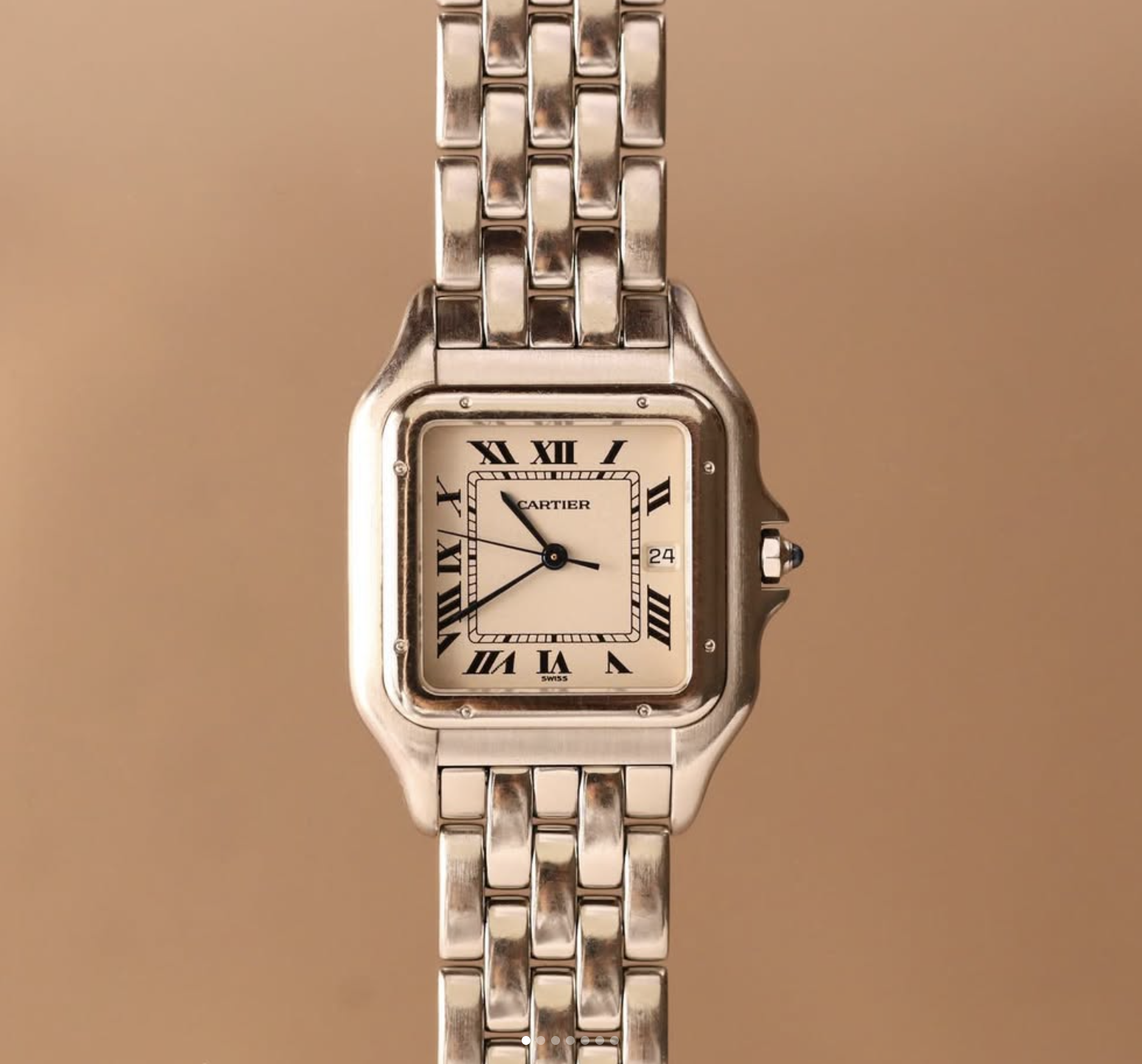
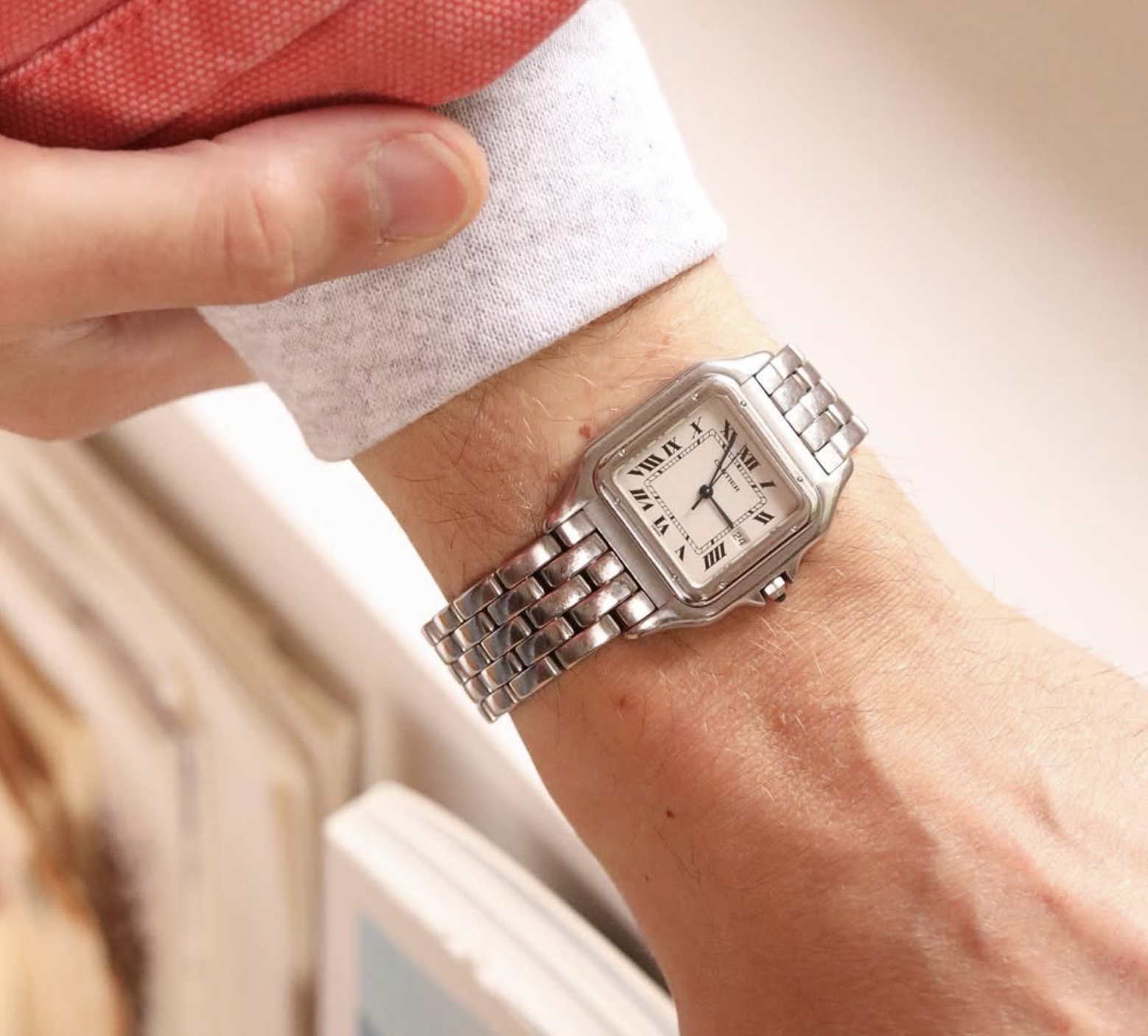
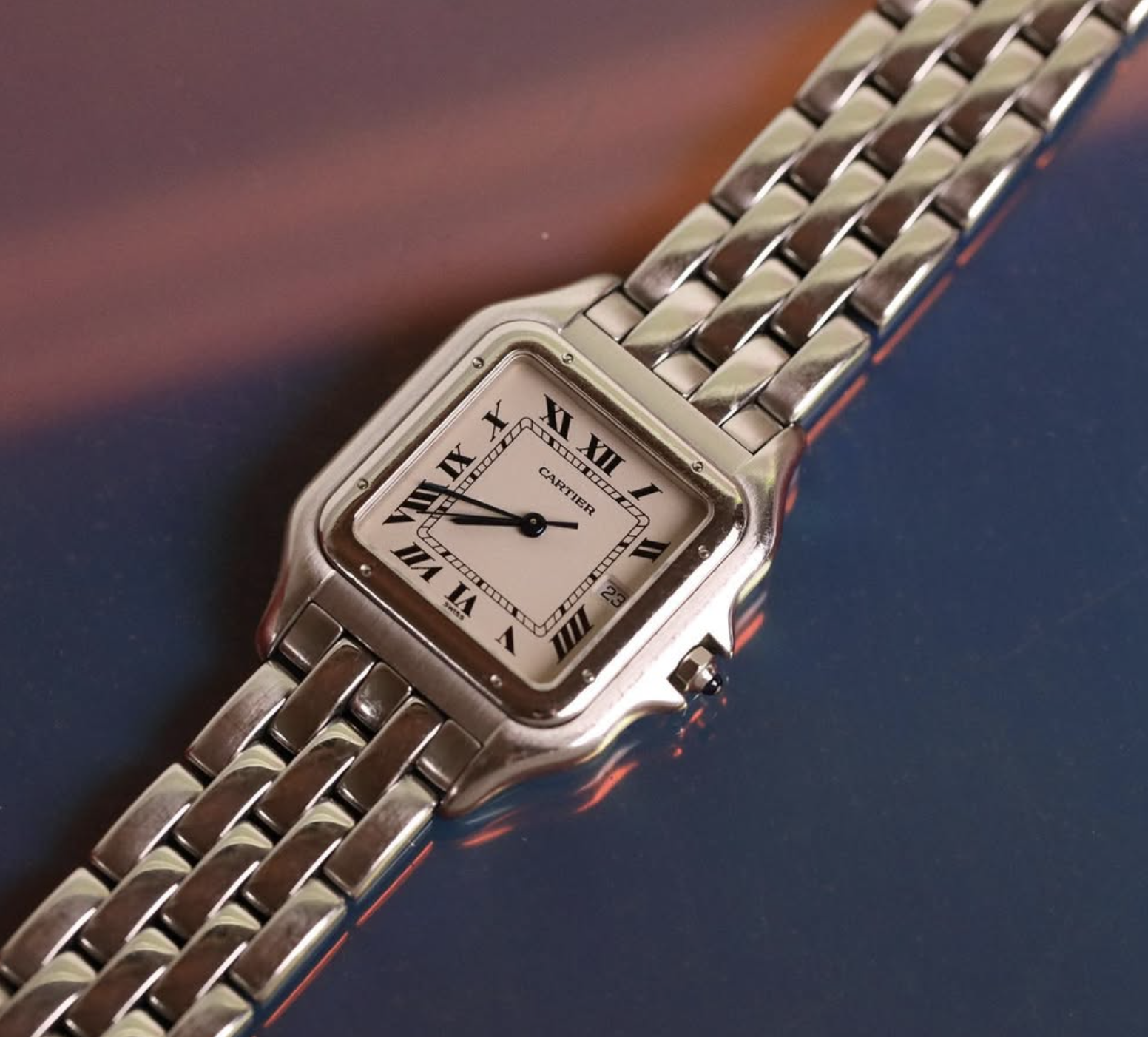
The Panthère Ref. 1300 is a rectangular tonneau-cased watch measuring approximately 29 × 22 mm—what Cartier styled as the "jumbo" size for the Panthère line. The case transitions seamlessly into an integrated bracelet of stainless steel, with no visible lug breaks; the bracelet appears to grow organically from the case itself.
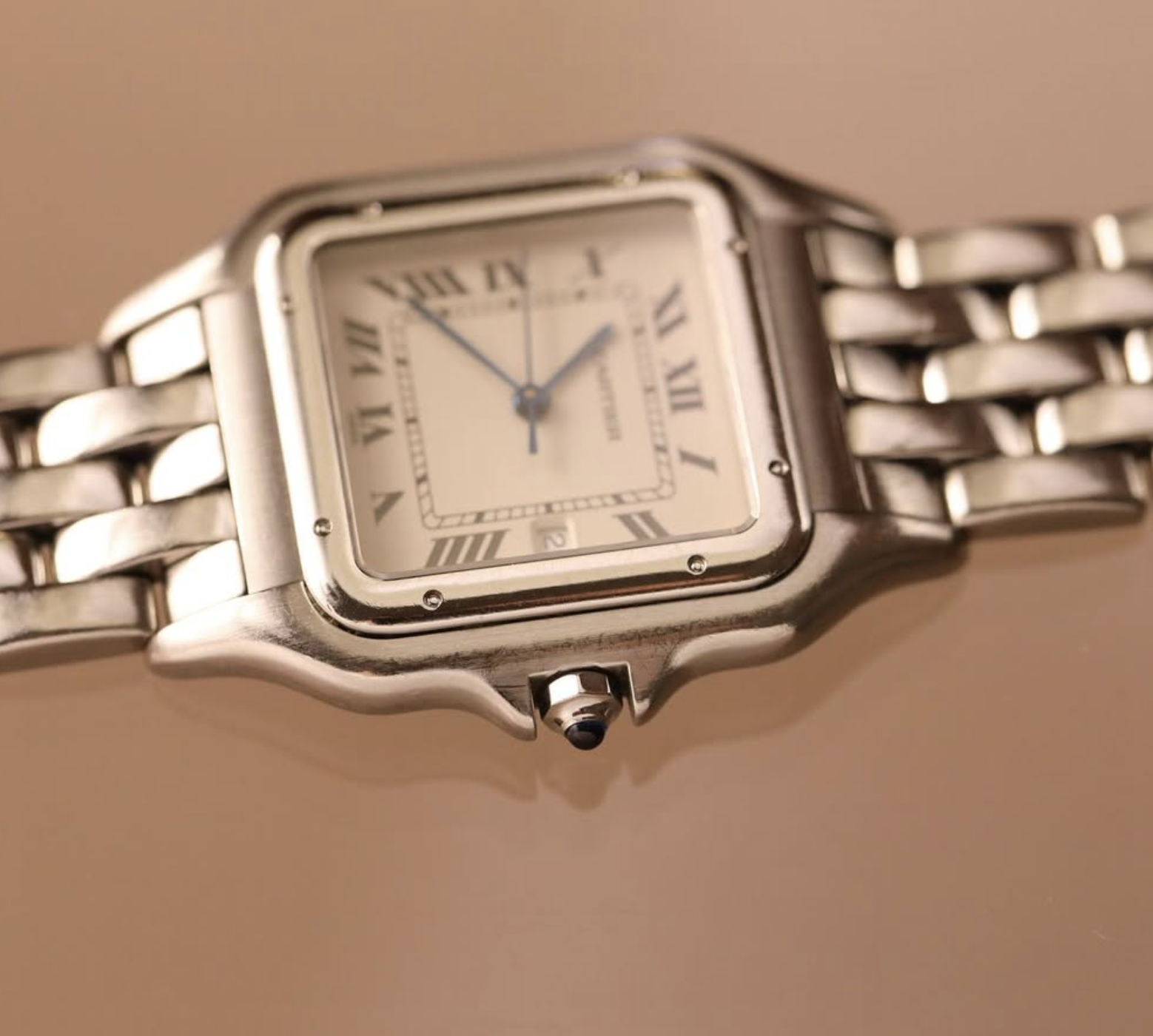
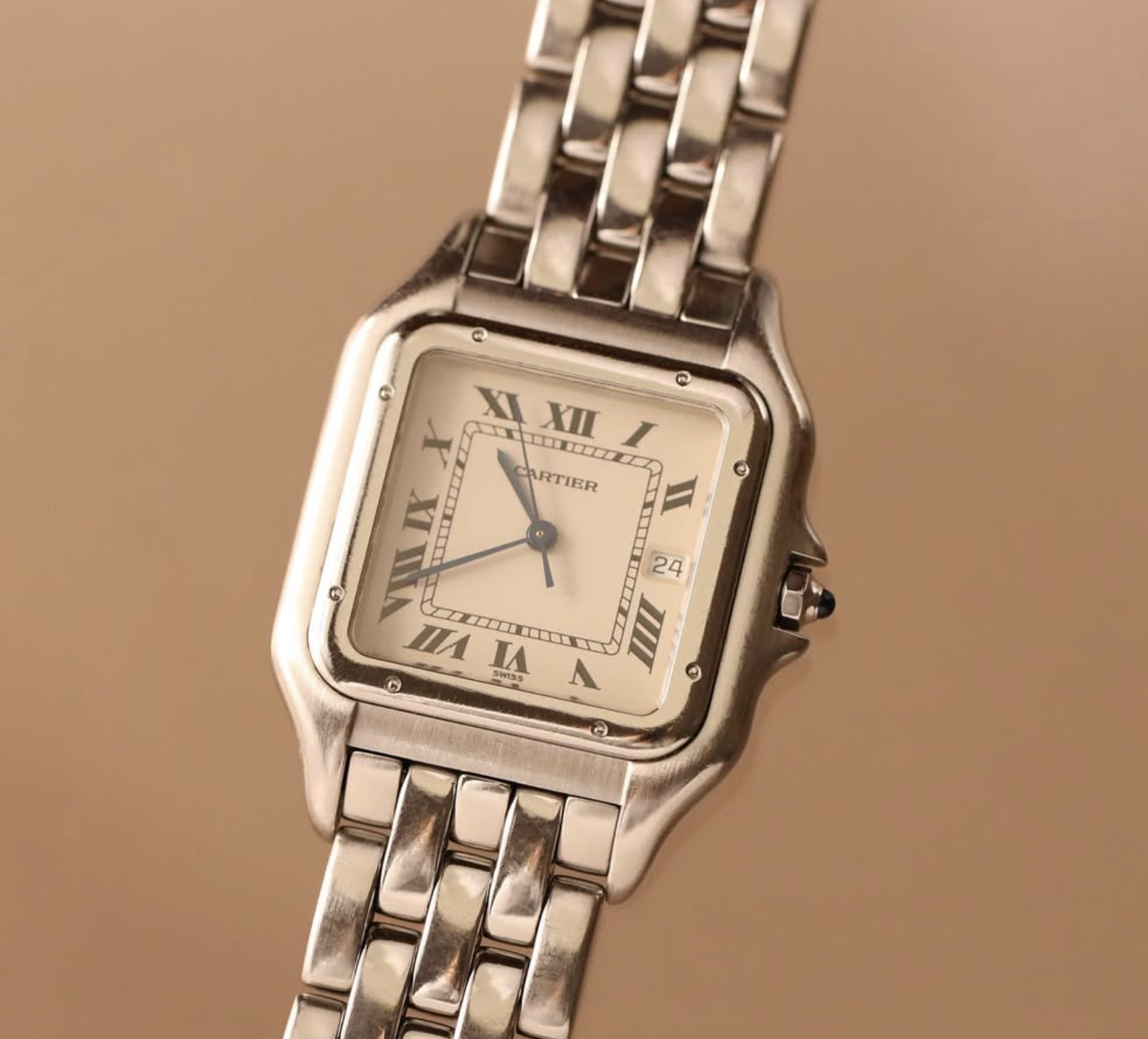
The bracelet construction is the visual centerpiece. Individual links alternate between high-polished and brushed finishes, creating a rhythmic play of light and reflection. The contrast between polished and brushed surfaces reads as deliberately composed, not accidental. The bracelet width is proportioned to the case (approximately 18–20 mm), sitting balanced at the wrist rather than appearing spindly or oversized.
The dial is cream or soft silver, unadorned. Black Roman numeral indices appear at 12, 3, 6, and 9 o'clock positions. The hour and minute hands are elongated blue swords—a signature Cartier detail that echoes the brand's pendant watch aesthetic. No date window, no seconds hand, no complications. The visual impact comes entirely from proportion and material.
The crown is positioned at 3 o'clock and features a blue sapphire cabochon set in stainless steel. The cabochon sits slightly proud of the case, making it both visually distinctive and functionally easy to grip for time-setting. The sapphire is typically a deep twilight blue, approaching navy.
The caseback is typically stainless steel, either polished or brushed, and often bears the Cartier signature and reference number. Early examples may have additional maker's marks or date codes, though documentation varies.
Reference Significance
The Ref. 1300 is the quintessential Panthère. It is the size and configuration that became synonymous with the model during its classic production run (1983–2000). It established the visual and technical vocabulary that defined the entire line: the integrated bracelet, the quartz movement, the sapphire crown, the Italian proportions.
Within Cartier's broader bracelet-integrated aesthetic, the Ref. 1300 sits between the Tank (more architectural, more austere) and the Crash (more sculptural, more experimental). The Panthère's design language is refined without being cold—the alternating polished/brushed bracelet links inject visual warmth and suggest careful composition.
The Ref. 1300 is also the reference most collectors encounter and recognize. When vintage watch enthusiasts refer to "a vintage Panthère," they are typically imagining a Ref. 1300 in stainless steel. It is the reference that proved the model concept and sustained production for nearly two decades.
Historical Context
The Panthère was launched in 1983 as part of Cartier's broader strategy to establish a complete range of integrated-bracelet designs. The early 1980s were a pivotal moment: quartz technology had matured and achieved legitimacy; the market for accessible luxury watches was expanding; and Cartier was consolidating its identity as a brand capable of excellence across price points and aesthetic territories.
The Ref. 1300 arrived in full stainless steel, making it substantially more accessible than the all-gold Ref. 107000 alternative. This democratization was intentional. Cartier positioned the Panthère as an entry point to the brand's integrated-bracelet aesthetic—a statement piece that didn't require precious-metal pricing or mechanical movement complexity.
Production volumes are undocumented, but surviving examples suggest sustained manufacture through the late 1990s or early 2000s. Early examples (c. 1983–1990) are marked by sharper finishing and tighter tolerances—the marks of a prestigious brand establishing a new line with rigorous QC. Mid-period examples (c. 1990–2000) show evidence of cost-conscious manufacturing optimization without compromising visual identity.
The quartz movement proved robust and reliable. Unlike some quartz-era watches that quickly became viewed as disposable, the Panthère's integrated bracelet architecture and careful finishing gave it sufficient material presence to justify ongoing wear and maintenance. Many Ref. 1300 examples that have survived 30+ years remain in daily use.
What to Look For
Movement Function: The quartz movement should run accurately (±10 seconds per month is typical tolerance for clean quartz). Test the movement across several days if possible. A dead movement doesn't indicate internal catastrophe but does require professional service.
Bracelet Integrity: This is the most critical authentication point. The integrated bracelet should move smoothly with no rattling or lateral flex in the links. Check that all links are present and original—replacement links are available but should match original finishing exactly. The concealed butterfly deployant clasp should operate smoothly and lock securely without play.
Polished/Brushed Finishing: Examine the bracelet under good light. The alternating finishes should be sharp and distinct. In mid-period examples, the polishing may be slightly less reflective than early examples, but the contrast should remain clear. Excessive polishing or uneven finishing suggests past repairs or refinishing.
Dial & Hands: The dial should show no chips, cracks, or lifting of printing. The Roman numerals should be sharply printed with no fading or oxidation. The blue hands should be uniform in color with no oxidation or discoloration. Any dial refinishing or hand replacement significantly diminishes value.
Crown Function: The sapphire cabochon crown should move smoothly between pull and push positions. Verify it doesn't stick, and that the stem winds the movement when pulled. Any crown damage (chips, cloudiness in the sapphire) is immediately visible and affects both function and aesthetics.
Case & Crystal: The case should be straight and undeformed. Check the lugs for cracks or stress marks. The sapphire crystal should be pristine—any scratching or internal crazing affects readability and suggests heavy use or impact. Replacement crystals are available but should be sourced from Cartier or specialist suppliers.
Dating & Documentation: Early examples (1983–1990) may have date codes in the caseback; later examples typically do not. Serial numbers vary in documentation. If original box and papers exist, they significantly increase value and aid authentication.
Condition Premiums: A museum-quality example with original bracelet, pristine dial, and full documentation might command 2–3x the price of a well-worn daily-wear piece. However, the robustness of quartz and the durability of the integrated bracelet mean even cosmetically challenged examples can be restored with conservative service.
The Ref. 1300 remains the definitive Panthère. It represents the sweet spot where Cartier's jewelry aesthetics met practical watchmaking and democratic pricing. For collectors seeking entry into the vintage Cartier market or connoisseurs of integrated-bracelet design, the Ref. 1300 in good condition is both attainable and enduring.