Visual Description
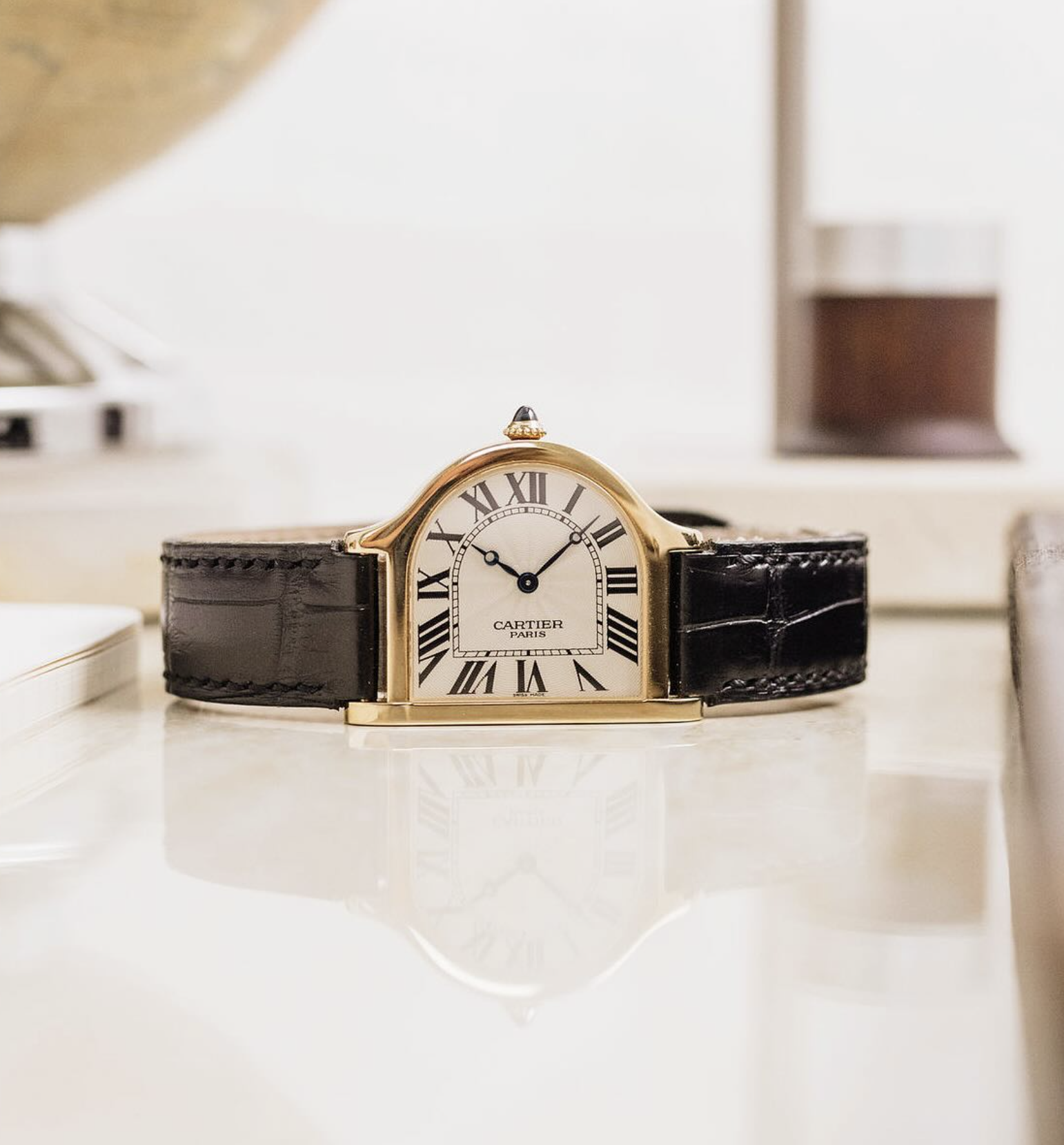
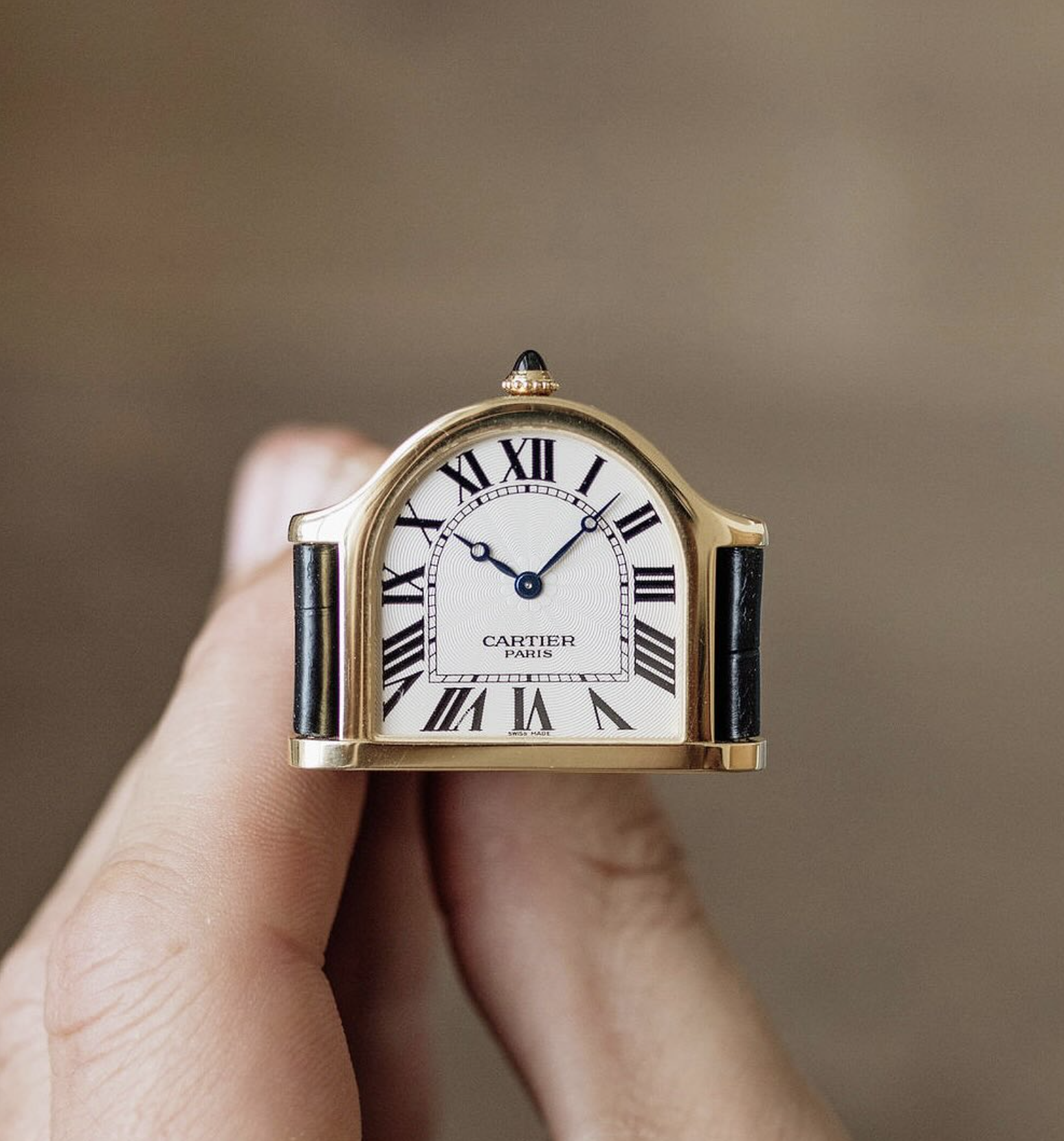
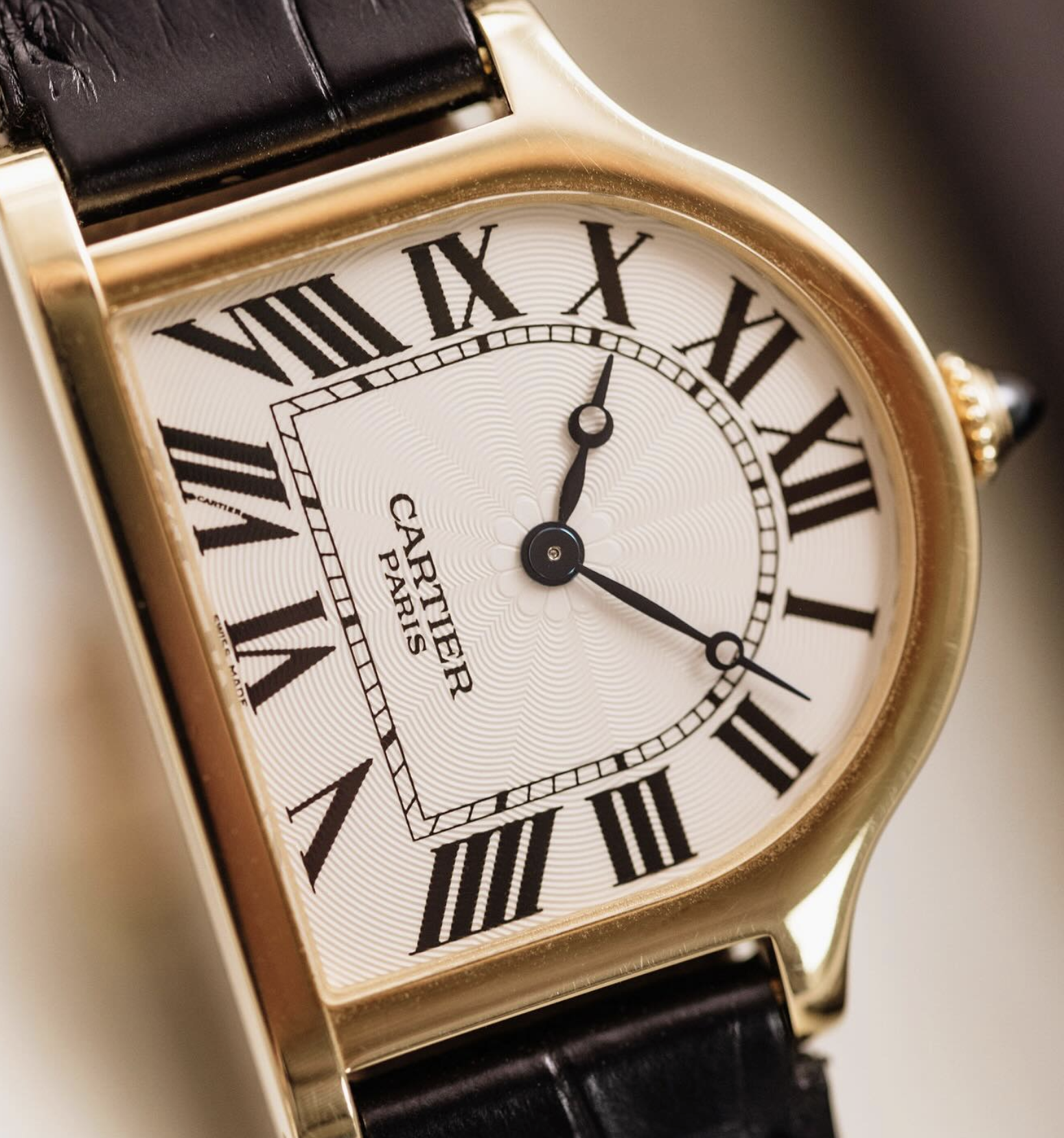
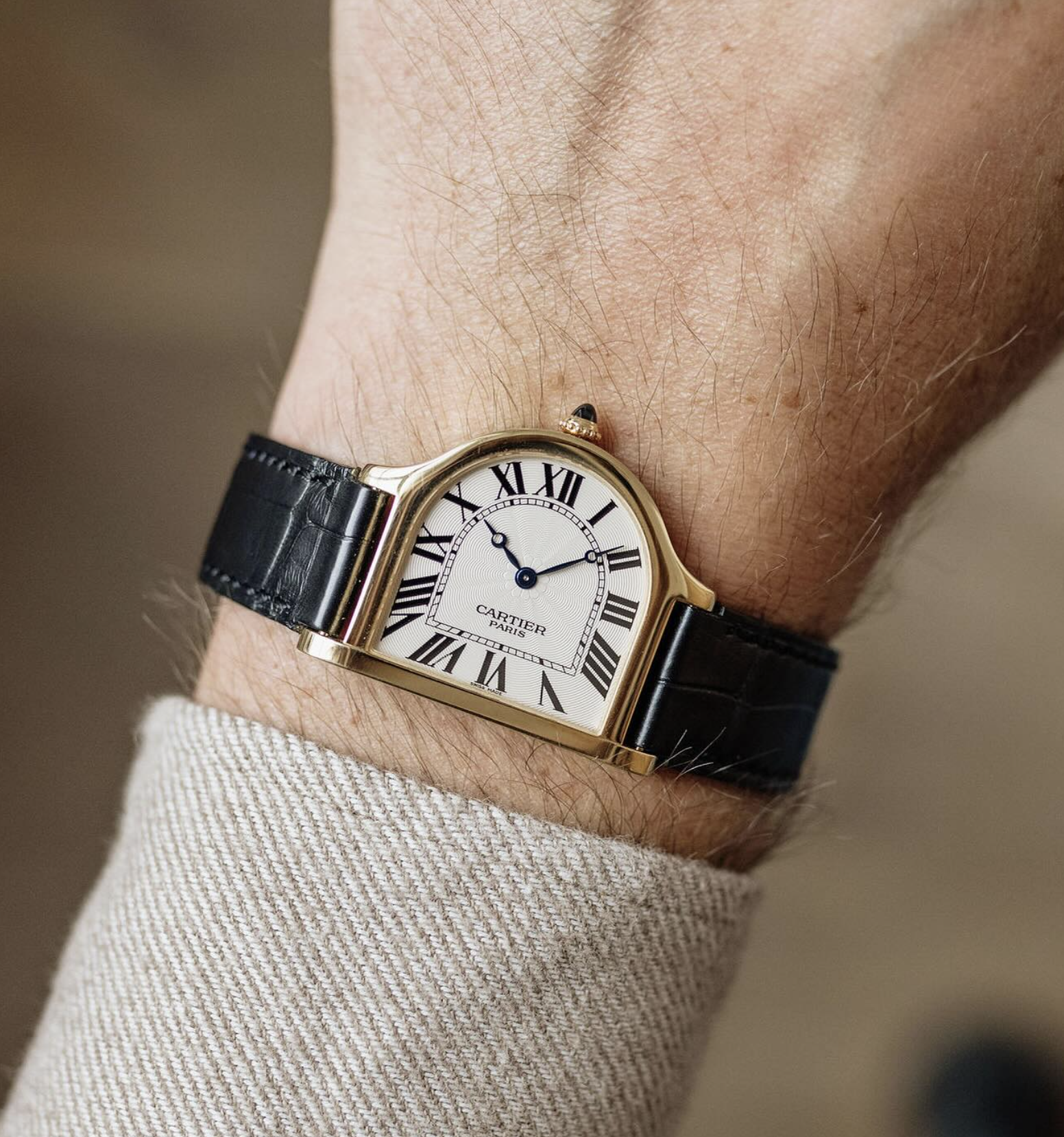
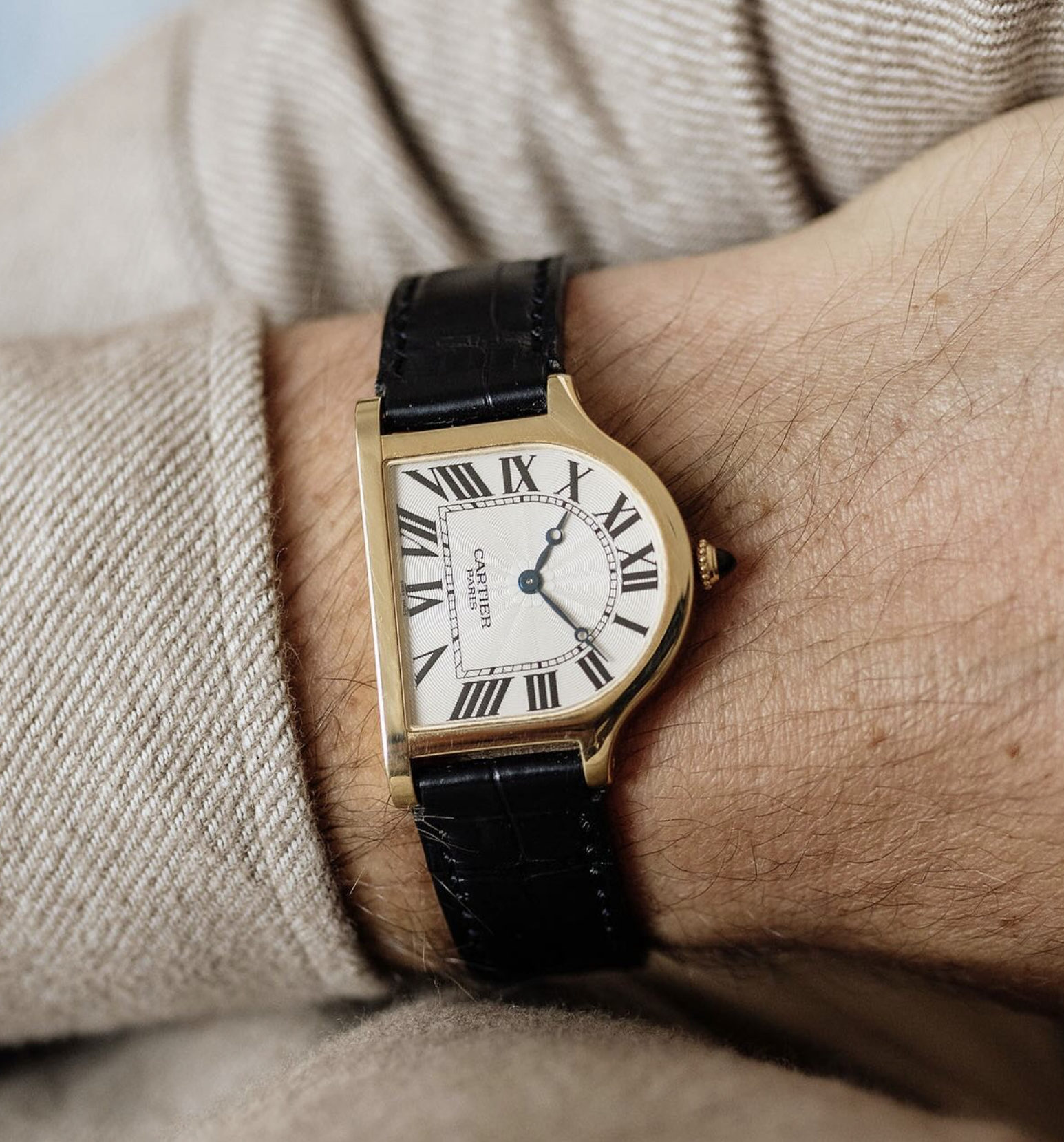
The ref. 2841 Cloche presents the bell-shaped case at its most refined, measuring 28.8 × 37.2 mm in 18k yellow gold, with a thickness of 6.1 mm. This is noticeably larger and more substantial than the ref. 8876, occupying meaningful real estate on the wrist while maintaining the asymmetric bell profile that defines the design. The dial is a white guilloché field with the most elaborate finishing found across any Cloche reference—a radiating rosette pattern that spirals outward from the center with mathematical precision. Painted Arabic numerals (larger and more legible than the earlier Art Deco set) surround the dial with a minute track completing the periphery. The XII remains positioned adjacent to the crown (at 3 o'clock), honoring the brooch-watch heritage. Blued steel Breguet hands, proportionally graceful, provide excellent contrast. The sapphire crystal sits flush with the bezel, and the watch is mounted on black alligator leather with an 18k gold deployment buckle.
The overall effect is one of restrained maximalism—every surface has been carefully considered and executed, yet the design avoids visual clutter. The rosette guilloché is the anchor; everything else orbits it quietly.
Reference Significance
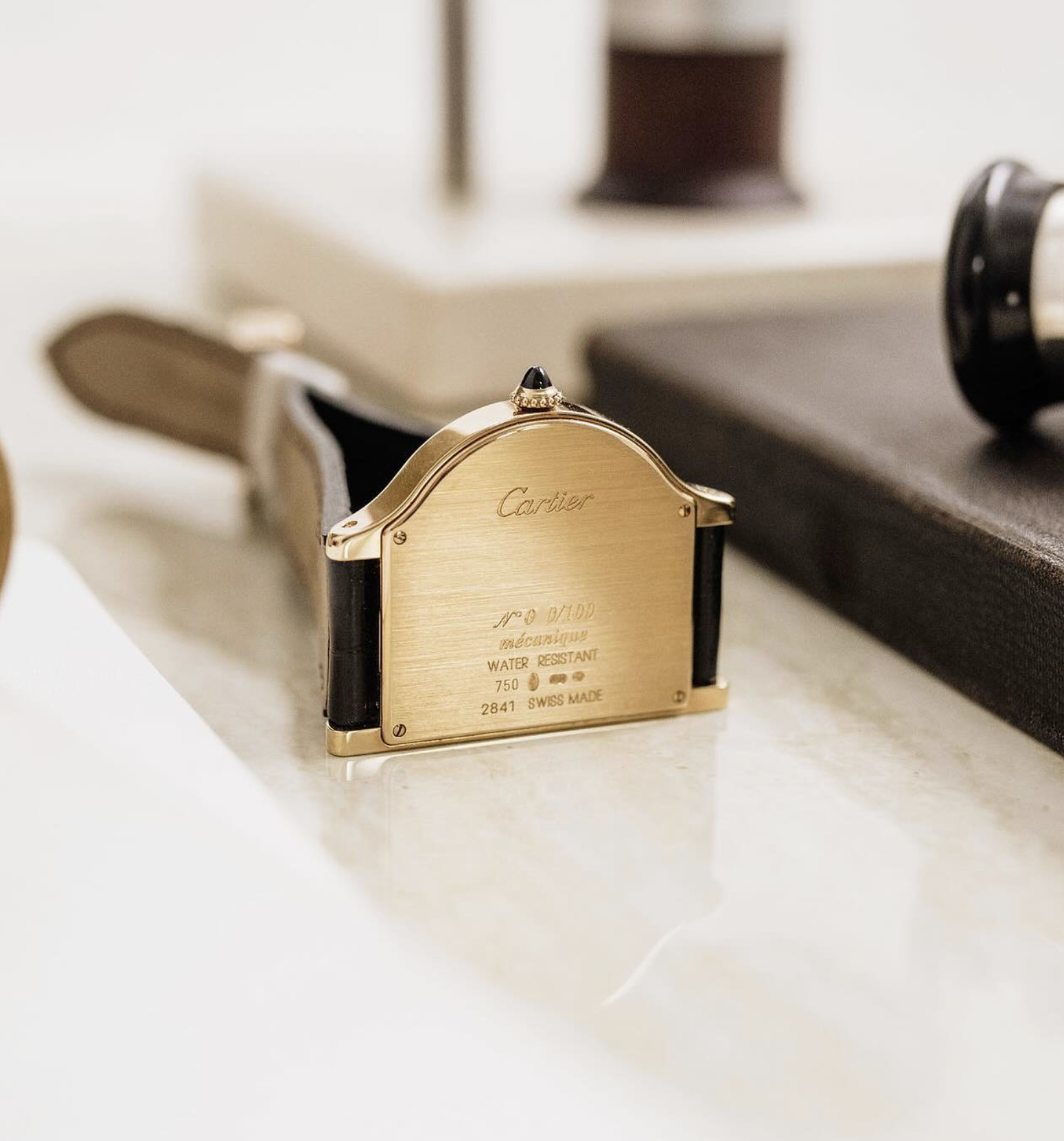
The ref. 2841 represents the Cloche at peak CPCP ambition. Limited to 100 pieces, it deployed the most accomplished dial finishing Cartier would apply to this design, supported by the Cal. 9770 MC—a more sophisticated movement than the earlier 9P2. The 38-hour power reserve and 21,600 vph frequency represent meaningful mechanical advances, positioning this reference as a serious collector's watch rather than a curiosity based purely on design heritage.
This watch was documented at Bonhams (lot 823) and has appeared in specialist dealer inventories with increasing frequency as CPCP collecting has matured. It occupies an unusual position in the Cartier timeline: contemporary production (early 2000s), yet designed and executed with the aesthetic conviction of much older references. For collectors, the 2841 is the definitive Cloche—larger, more technically accomplished, and more elaborately finished than its predecessors.
Historical Context
By 2000, Cartier's CPCP collector program was well-established, having proven that limited mechanical production of archival designs could sustain genuine collector interest. The ref. 2841 exemplifies this confidence—the case grew larger, the dial more intricate, the movement more capable. The rosette guilloché pattern was a departure from the earlier sunburst, suggesting design evolution informed by engineering considerations and aesthetic refinement.
The Cal. 9770 MC was a Piaget-based movement, consistent with Cartier's technical sourcing within Richemont. The choice of 21,600 vph (versus the more common 18,000 vph) was an explicit signal of precision, typical of early-2000s luxury watchmaking philosophy when higher frequencies were perceived as markers of quality. This reference thus documents a specific moment in horological aesthetics—one where complications were secondary to finish, and movement performance was calibrated for prestige rather than necessity.
What to Look For
The rosette guilloché dial is the defining characteristic and requires careful inspection. Authentic rosette patterns maintain perfect radiating symmetry with evenly-spaced concentric lines; sanded or re-finished dials lose this precision. View the dial under bright light at various angles—genuine guilloché catches light in distinctive ways as the viewing angle changes. Any flat appearance or uniform sheen suggests refinishing.
The case should exhibit even patina across all surfaces; localized overpolishing (particularly on the lugs or case sides) suggests service refinishing. Measure the case dimensions if possible—dial versions may exist with slight variations, and accurate measurement confirms reference attribution. The movement should run smoothly with audible ticking; the Cal. 9770 MC is relatively modern and should respond to competent service.
The sapphire crystal should be clear and free of cracks; minor surface scratches are acceptable and expected. The alligator leather strap should display natural grain patterning and aging; modern replacement straps appear uniform. The deployment buckle should engage solidly with a perceptible click. Documentation is substantial for this reference—auction house records and specialist dealer provenance are more readily available than for the earlier ref. 8876, making attribution more straightforward. Look for a clear service history; any gaps or vague sourcing warrant technical examination of the dial and case finish by an experienced eye.