01DIAL
The Secret Signature
Introduced 1977
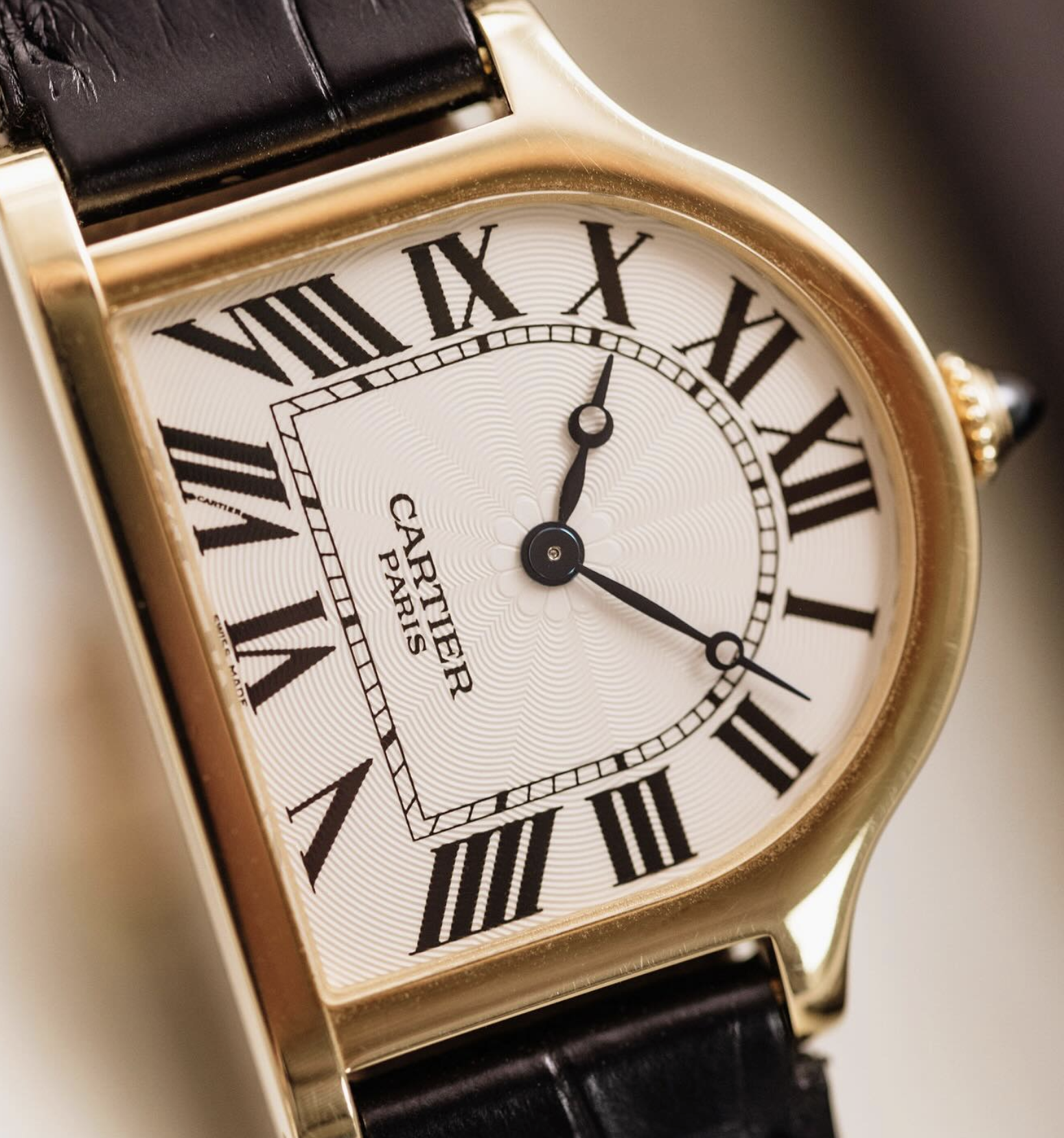
A microscopic 'CARTIER' hidden within the Roman numerals — present on every genuine post-1977 dial.
Cartier
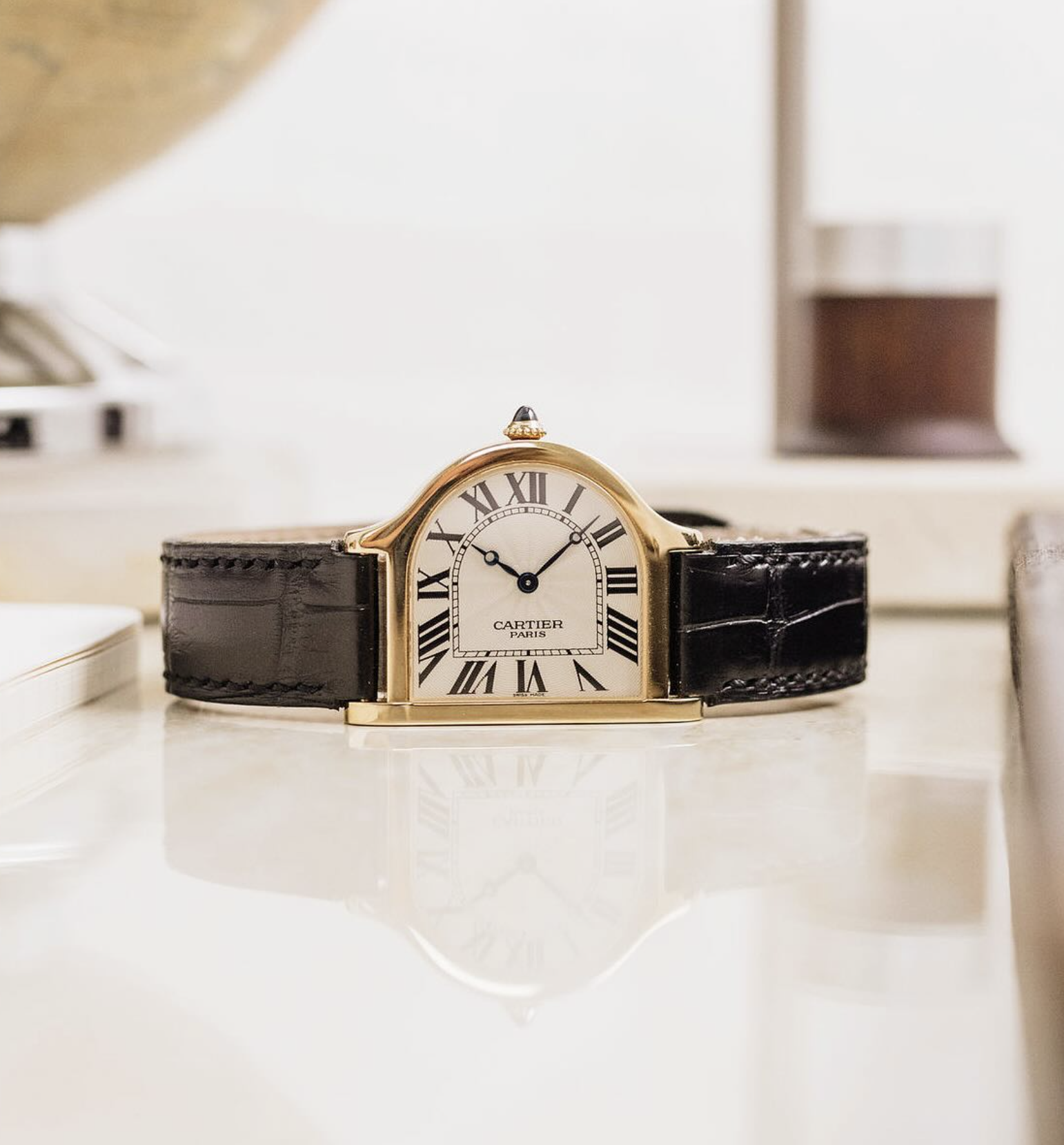
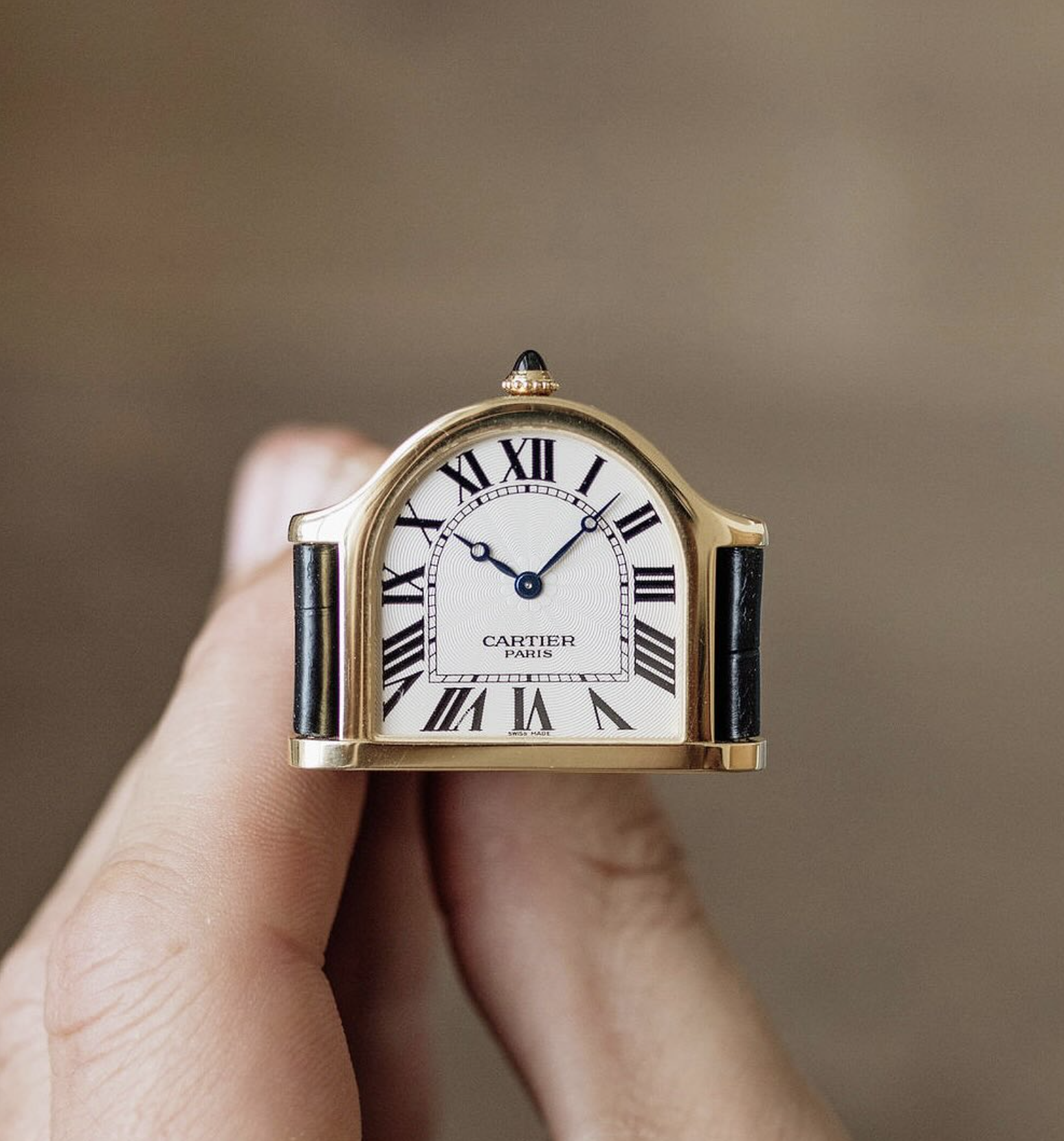
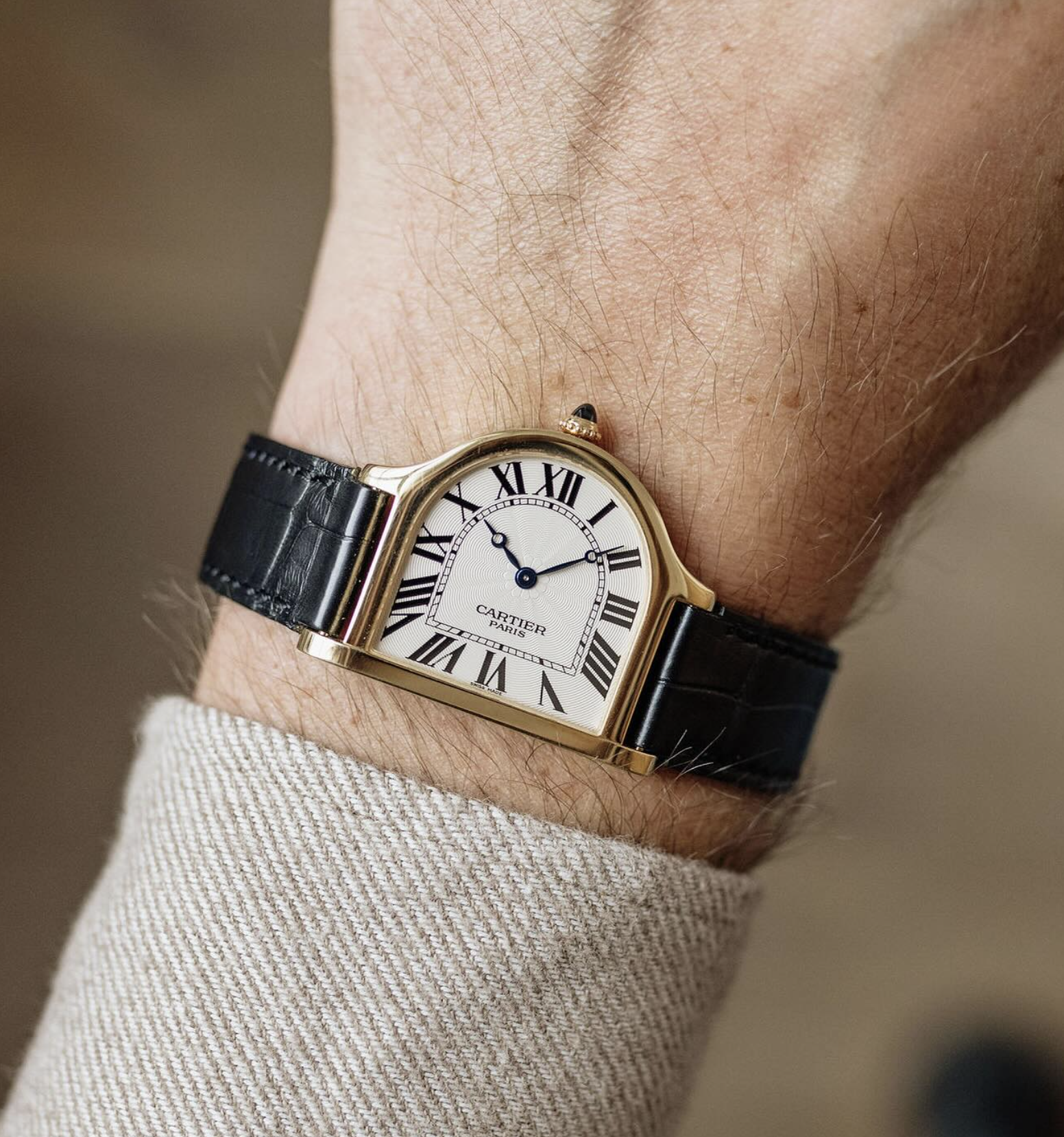
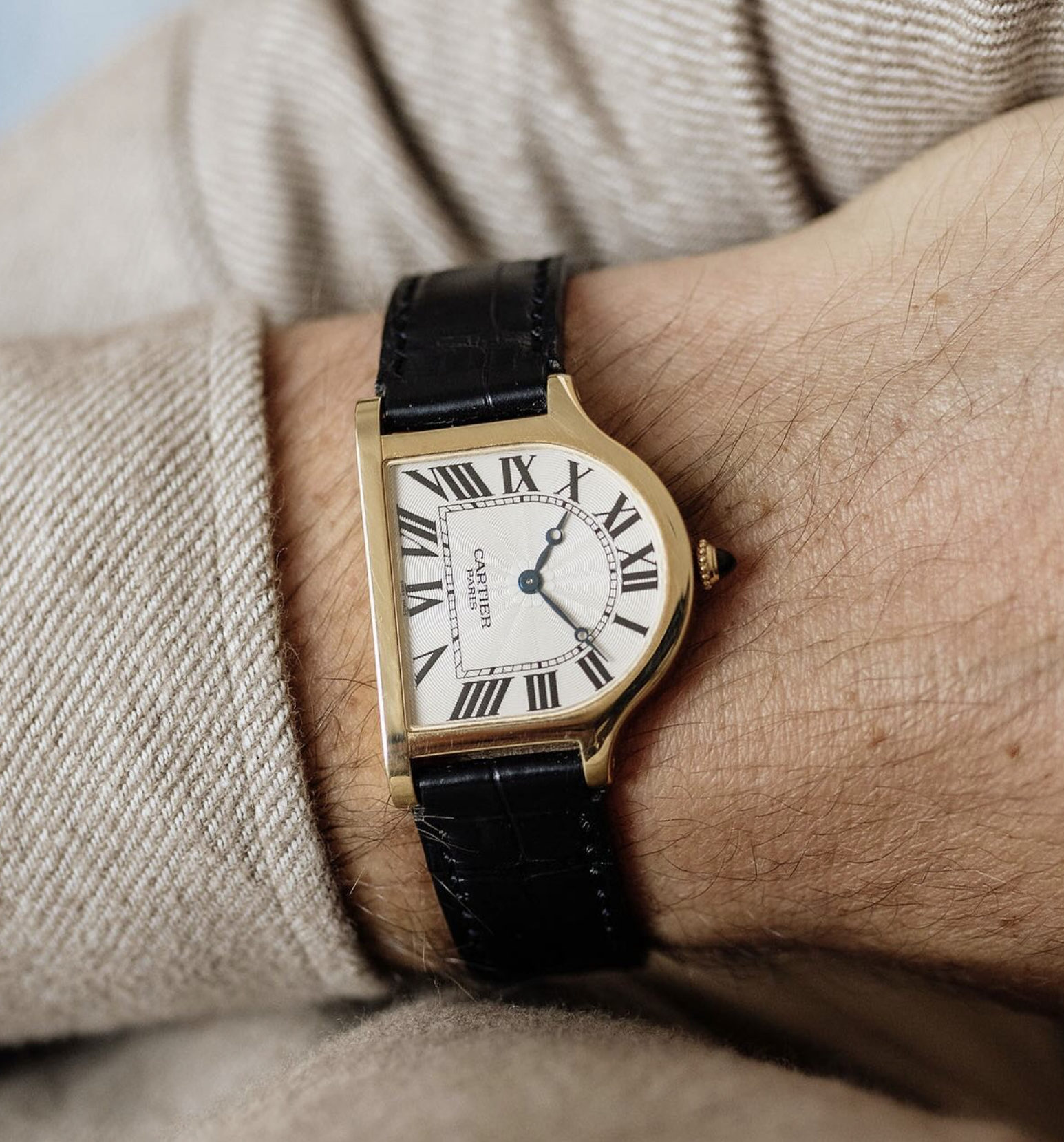
A bell-shaped asymmetric case from 1920 — originally a brooch watch, later a wristwatch, and always one of Cartier's most sculptural creations.
The Cloche appeared in 1920 as a brooch watch — a piece of jewelry first, a timepiece second. Its asymmetric case, shaped like a service bell, was designed to be pinned to clothing and lifted to read the time. The XII numeral sits adjacent to the crown rather than at the top of the dial, because the wearer would rotate the bell upward to check the hour — a reading orientation that makes the Cloche instantly recognizable and frequently misunderstood by those encountering it for the first time.
By 1922, Cartier had adapted the form into a wristwatch, maintaining the rotated dial orientation as a deliberate design signature rather than correcting it to conventional wrist-reading position. This decision — prioritizing the design's history over ergonomic convention — established the Cloche as one of Cartier's most uncompromising creations.
The Cloche's bell silhouette has no parallel in Cartier's catalog or in watchmaking more broadly. The case widens from a narrow base to a curved dome, with the crown positioned at the widest point. Early twentieth-century examples in platinum featured diamond-set bezels and were produced in quantities so small that surviving originals are museum-grade rarities — one of very few documented examples has been offered at well over $200,000.
Unlike the Tank or Santos, which evolved through continuous commercial production, the Cloche existed intermittently. After its Art Deco heyday, the model essentially disappeared from Cartier's active catalog for decades. Individual pieces surfaced through special orders, but there was no sustained production line.
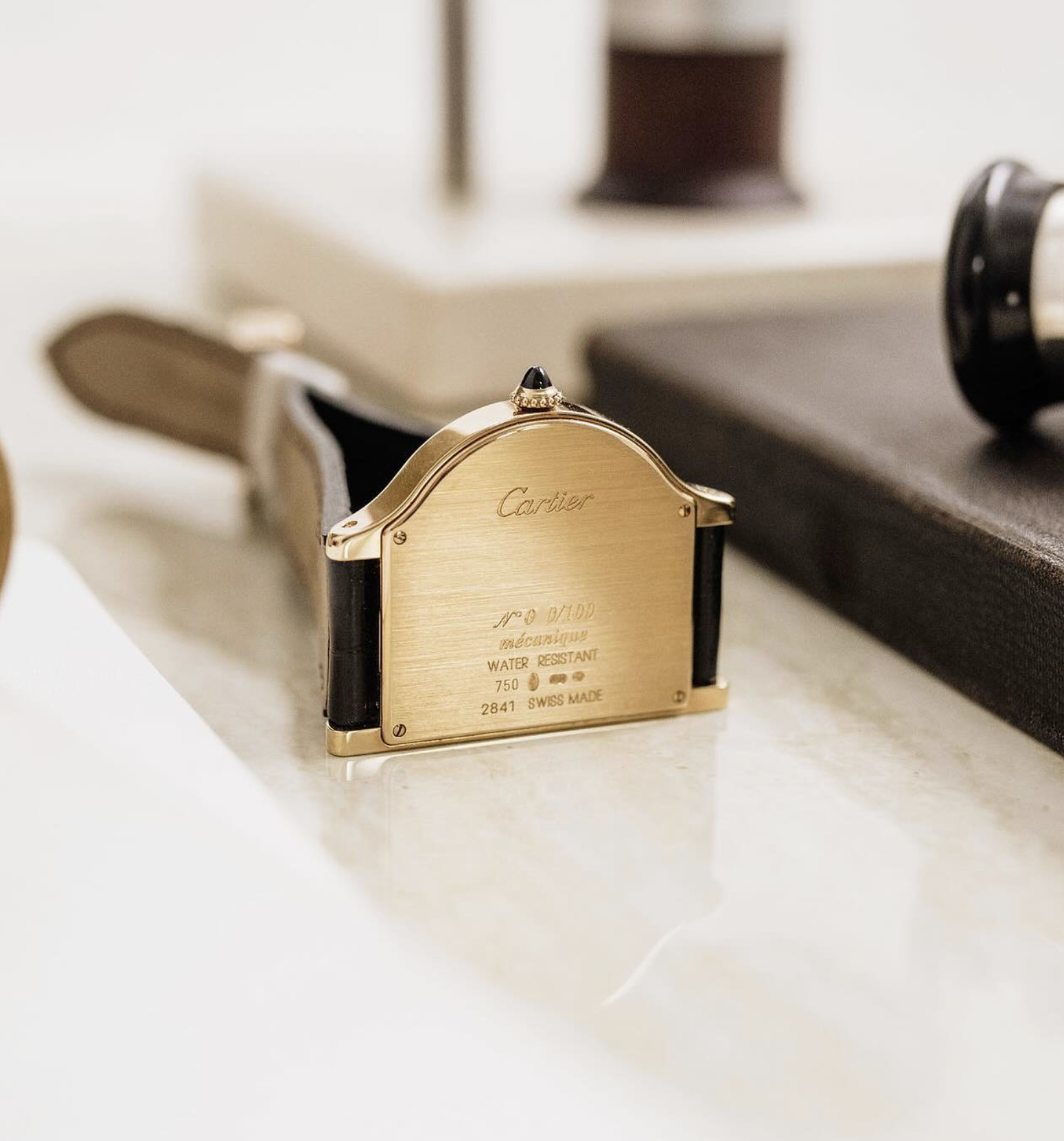
The Cloche's most accessible modern production came through two phases in the 1990s. First, a limited run in the mid-1990s (Ref. 8876 in 18k yellow gold, approximately 200 pieces) reintroduced the form with a manually wound mechanical movement and guilloché dial. Then the Collection Privée Cartier Paris (CPCP) program produced the Ref. 2841 around 2000, limited to 100 pieces in yellow gold, with the Cal. 9770 MC providing 38-hour power reserve. Additional CPCP references in rose gold and platinum followed, each limited to 100 pieces.
These CPCP Cloche references have become among the most sought pieces in the entire CPCP catalog. The combination of Cartier's most distinctive case shape with mechanical movements and extreme production limits has created a collector market where demand consistently exceeds supply.
The Cloche occupies a unique position in the vintage Cartier market: it is simultaneously one of the maison's oldest designs (1920) and one of its least available. Collectors drawn to the Cloche tend to be specialists in Cartier's shaped-case history — people who value design audacity over brand recognition. The rotated dial, the asymmetric case, and the brooch-watch heritage make it a conversation piece in the most literal sense: it requires explanation, and the explanation is worth having.
Ref. 2841 · c. 2000
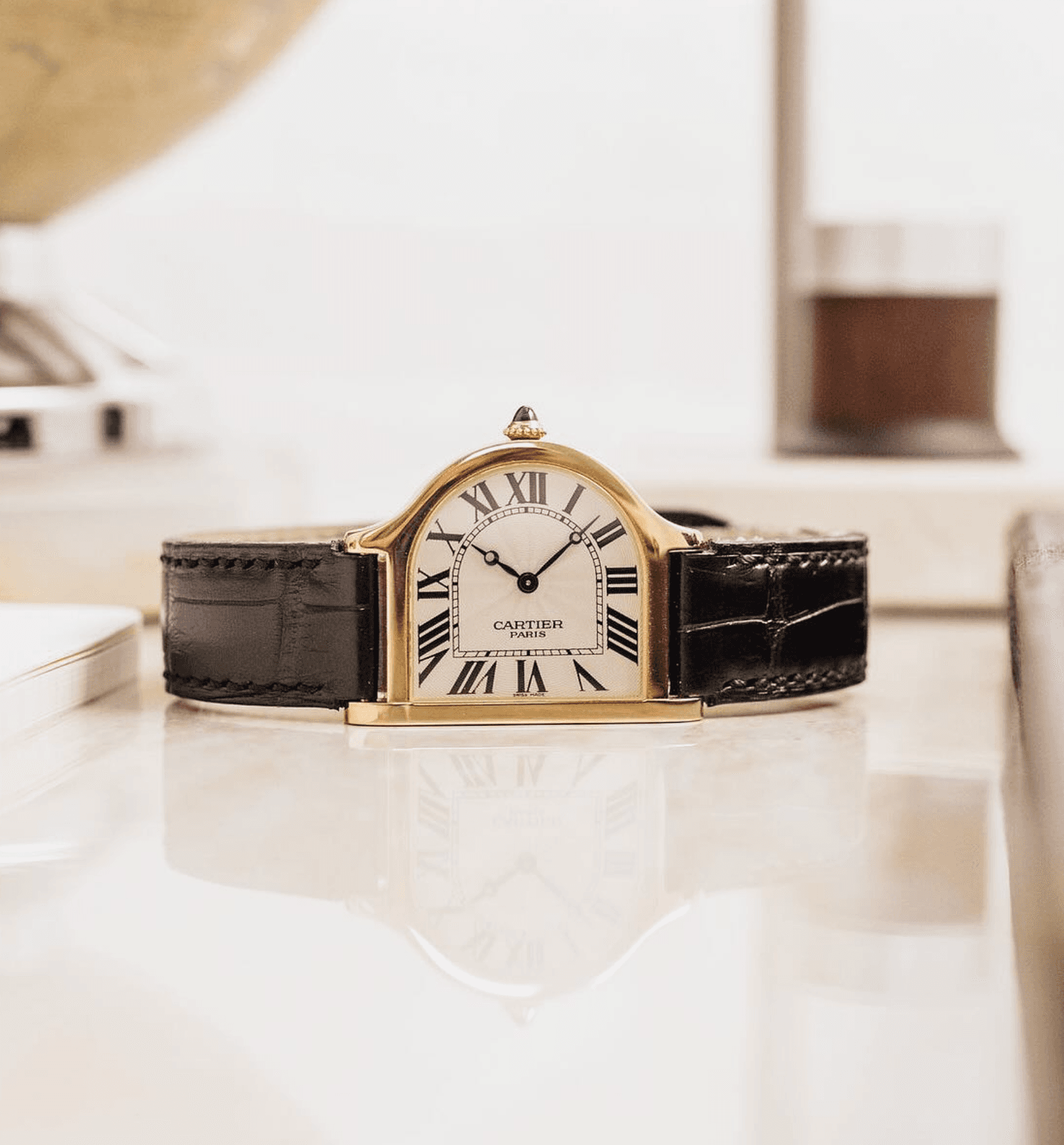
The Cloche de Cartier Ref. 2841 from the Collection Privée Cartier Paris — a manually wound 18k yellow gold bell-shaped wristwatch limited to 100 pieces. The CPCP Cloche preserves the model's radical asymmetry: the XII position is rotated 90 degrees, adjacent to the crown, maintaining the original brooch-watch orientation where the wearer lifted and rotated the piece to read the time. Powered by the Cal. 9770 MC with 38-hour power reserve, this is the Cloche at its most refined and most rare.
3 documented references across 1 era
| Reference | |
|---|---|
 | Ref. 2841 |
| Ref. 8876 | |
| Ref. WGCC0003 |
What every buyer, inheritor, and first-time collector should know.
Coming soon — vetted dealer listings for Cloche de Cartier.
Introduced 1977
A microscopic 'CARTIER' hidden within the Roman numerals — present on every genuine post-1977 dial.
Varies by era
Genuine Cartier cases bear specific hallmarks including the Cartier name, reference number, serial number, and precious metal assay marks. Placement and style varies by era, with earlier pieces showing different hallmark configurations than modern examples.
Varies by era and model
Cartier sourced movements from various Swiss manufacturers throughout history, including Jaeger-LeCoultre, Frédéric Piguet, ETA, and in-house production. Knowing the correct caliber for a specific reference is essential for authentication and establishing provenance.
A Cartier hallmark since the early 20th century
The blue sapphire (or spinel on less precious models) cabochon crown is a Cartier signature. Original crowns show consistent color saturation and are set flush with the crown body. Replacements often show misalignment or incorrect stone dimensions that reveal themselves under magnification.
Check the clasp first
Cartier bracelets carry their own reference markings and the deployment clasp should bear the Cartier name and logo. Aftermarket bracelets are extremely common on vintage pieces, so verifying clasp authenticity and matching reference numbers is crucial to overall authentication.
Patina tells the story
Vintage Cartier dials develop characteristic aging—cream dials warm to ivory, lacquer dials may develop fine crazing, and applied indices can show legible wear patterns. Understanding acceptable versus concerning dial aging is key to valuing a vintage piece authentically.
Coming soon — price trends and comparable sales for Cloche de Cartier.
The Cloche is one of Cartier's rarest and most distinctive designs. Confirm the reference, verify the edition number, and understand its place in the model's history.
START HERE →BUYERWith production runs of 100–200 pieces, every Cloche demands rigorous authentication. The asymmetric case makes condition assessment especially critical.
CHECK BEFORE YOU BUY →SELLERCloche values reflect extreme scarcity and growing CPCP collector interest. Position and provenance matter enormously.
PRICE MY WATCH →