Visual Description
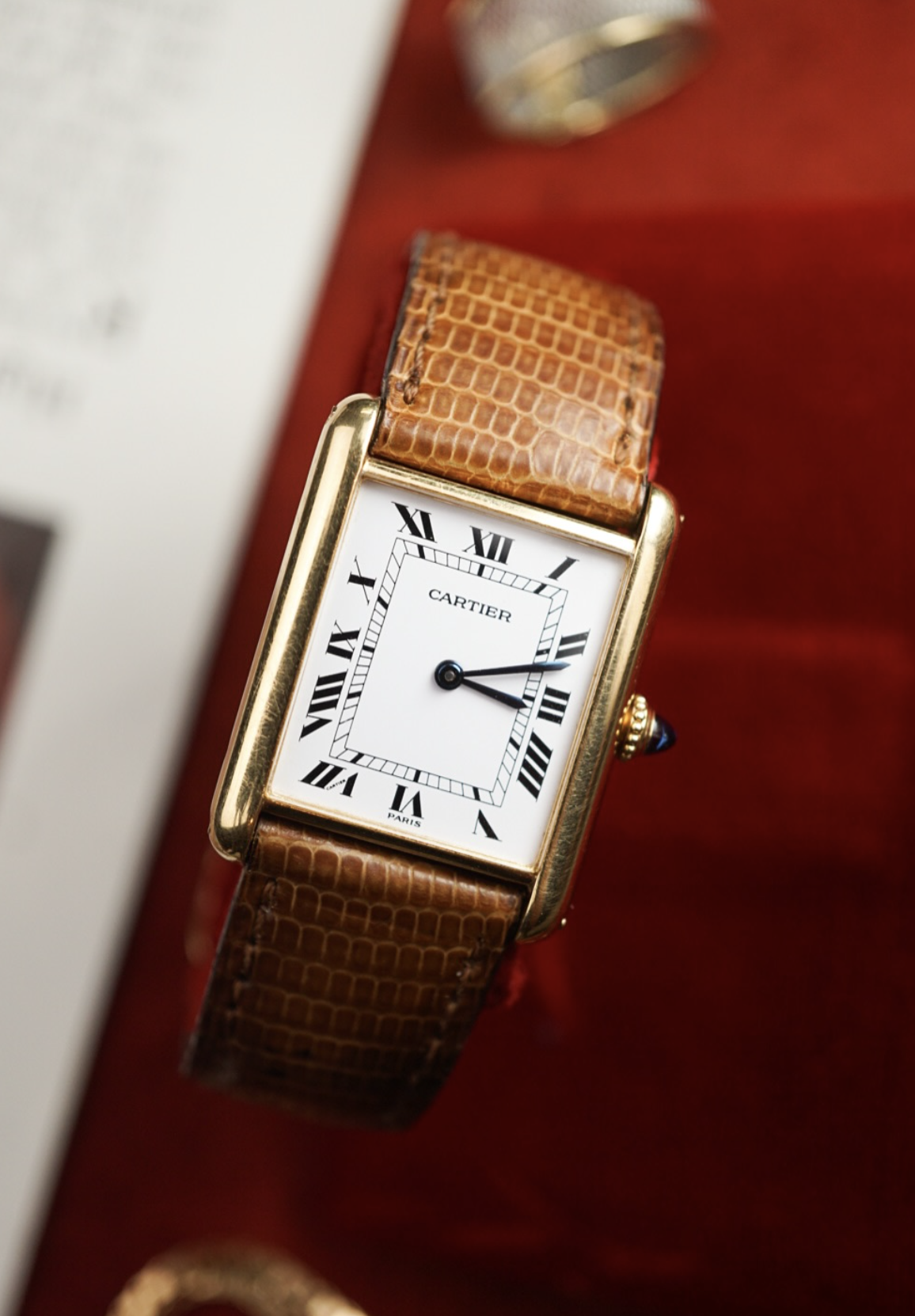
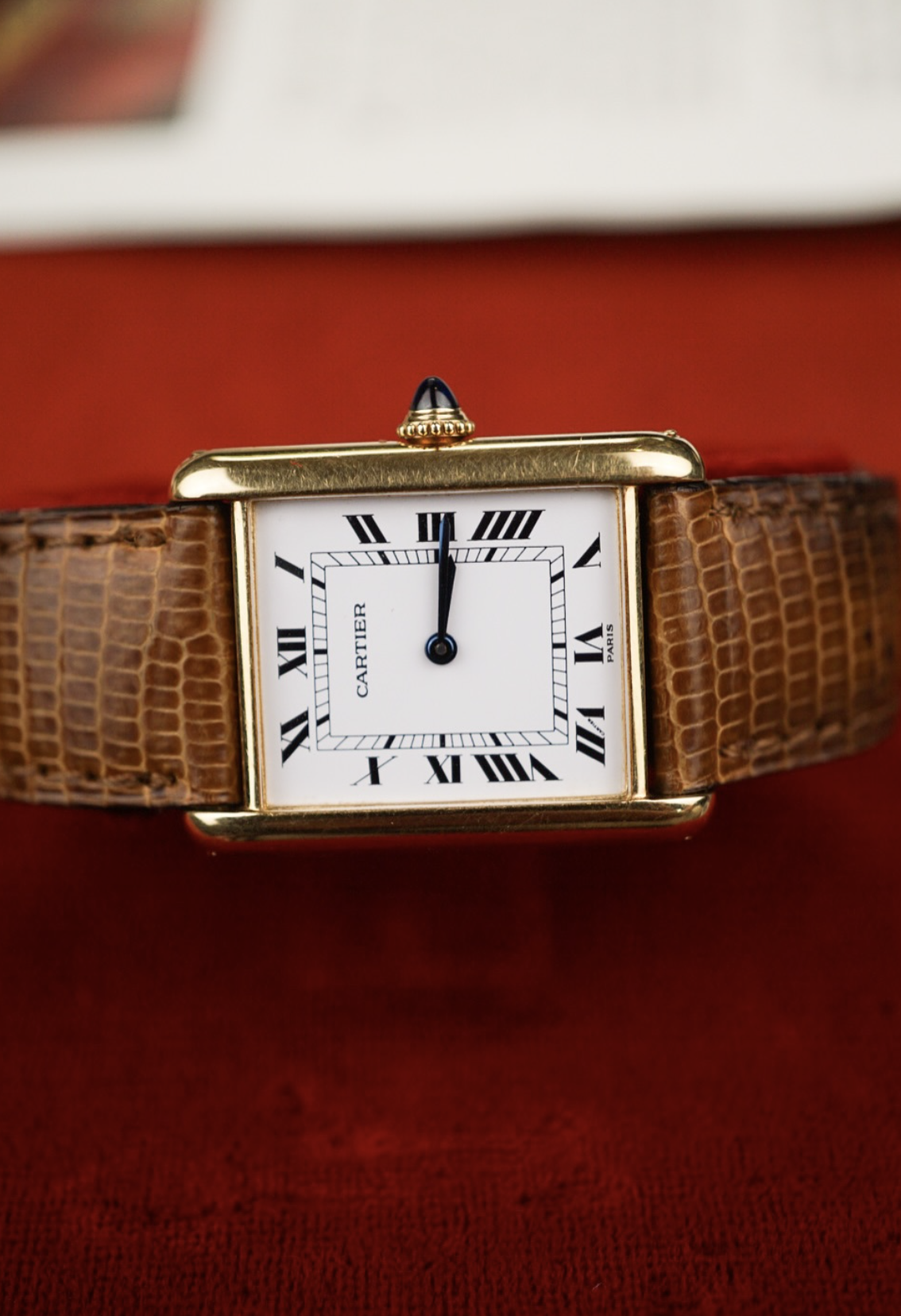
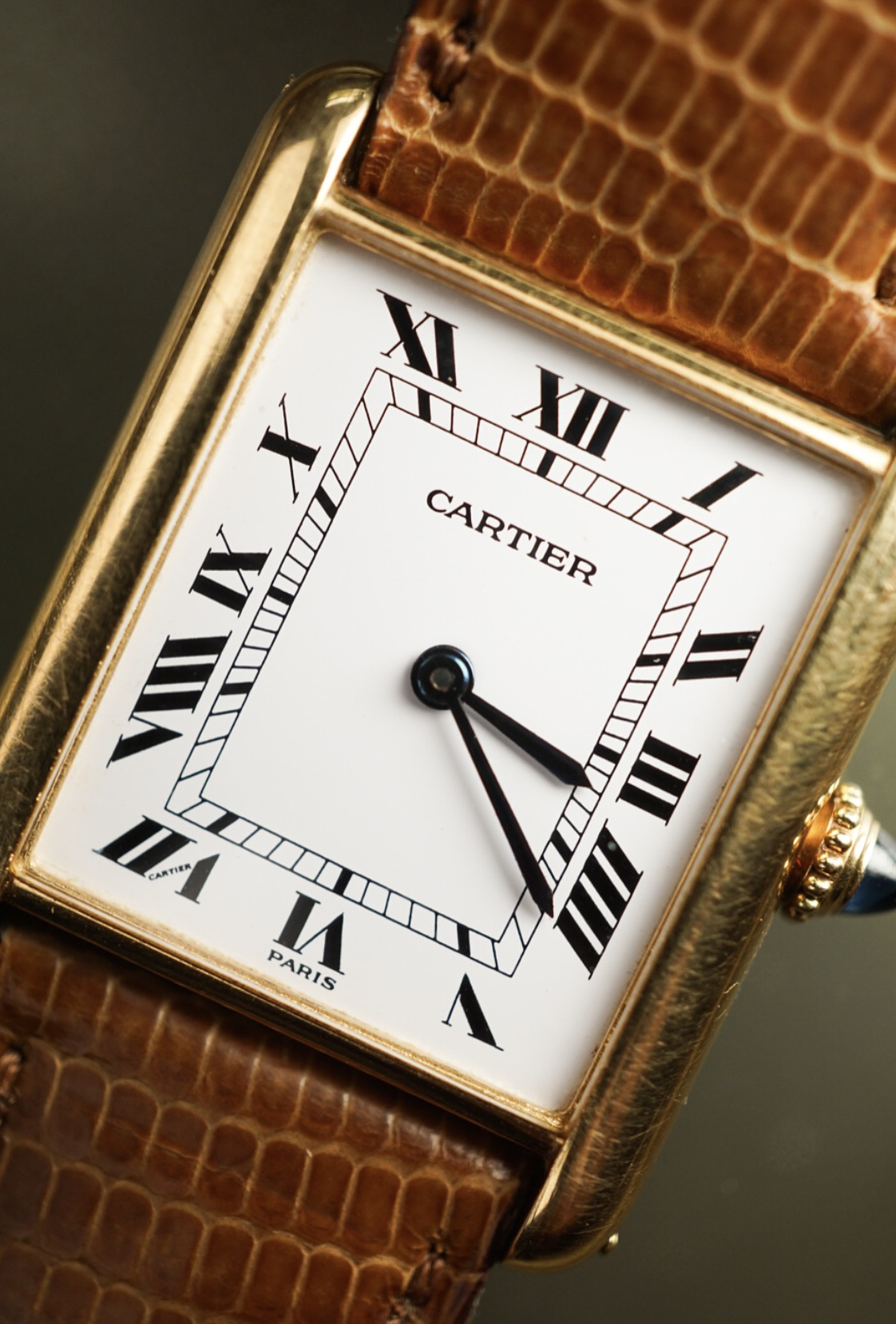
The Ref. 78086 is the Tank Louis Cartier at its most essential. The 23 × 30 mm case in 18k yellow gold frames a white lacquer dial carrying black Roman numerals along a chemin de fer minute track — no date, no complications, nothing between the wearer and the time. Blued steel sword hands move beneath a mineral glass crystal, and a blue sapphire cabochon crowns the winding stem. The case back is engraved "CARTIER PARIS" on original-condition examples, and the most desirable dial variant carries the same "CARTIER PARIS" signature at 12 o'clock rather than the later "SWISS MADE" marking at 6. Every element is calibrated for quiet precision: the proportions of the Roman numerals to the minute track, the width of the brancards relative to the dial aperture, the exact blue of the hands against the white dial.
Reference Significance
This is the reference. The Ref. 78086 is the Tank Louis Cartier that collectors, historians, and horologists point to when they want to show what a Tank is supposed to be. It is the last generation of mechanical Tank Louis production before Cartier's transition to quartz in the early 1980s — the final expression of the hand-wound dress watch tradition that began when Louis Cartier drew the first Tank in 1917.
The Cal. 78-1 manual-wind movement, based on the ETA 2512-1, delivers 42 hours of power reserve from 17 jewels beating at 21,600 bph. It is a simple, reliable caliber chosen for its thinness and accuracy rather than for horological complexity — which is exactly the point. The Tank Louis was never about the movement. It is about the case, the dial, the proportions, and the way it sits on a wrist.
Among the 78086 production, two tiers exist. The Paris-dial variant — signed "CARTIER PARIS" on the dial — is the more desirable, commanding a 10–20% premium at auction. Many examples have had their dials replaced during service with "SWISS MADE" dials, which, while authentic Cartier production, lack the provenance of the original Paris marking. A white gold variant also exists but is exceptionally rare, estimated at roughly 1 in 20 examples produced.
Historical Context
The 78086 was produced during the pivotal decade when Cartier reunified its three historic houses — Paris, London, and New York — under single ownership. The reunification, completed in 1972, initiated a period of rationalized production and expanded distribution that would ultimately transform Cartier from a network of independent ateliers into a global luxury brand. The 78086 straddles this transition: early examples bear the hallmarks of Cartier Paris workshop production, while later pieces reflect the consolidation of Swiss manufacturing that would define the Cartier of the 1980s and beyond.
At auction, the 78086 appears regularly at Sotheby's, Christie's, Bonhams, and regional houses, typically realizing $7,000–$11,000 depending on condition and dial variant. Paris-dial examples in unpolished condition with original deployant clasps and documentation represent the top of the market. The reference's consistent auction presence reflects both healthy supply — it was produced in meaningful numbers over roughly a decade — and steady collector demand that shows no sign of softening.
What to Look For
The first authentication check is the dial signature. Paris-dial examples read "CARTIER PARIS" at 12 o'clock in a specific typeface and spacing that counterfeiters frequently get wrong. Swiss-dial examples read "CARTIER" at 12 with "SWISS MADE" at 6. Both are authentic Cartier production, but a watch presented as a Paris dial should be verified carefully. The hidden Cartier signature within the VII Roman numeral is present on both variants and is a key authentication detail.
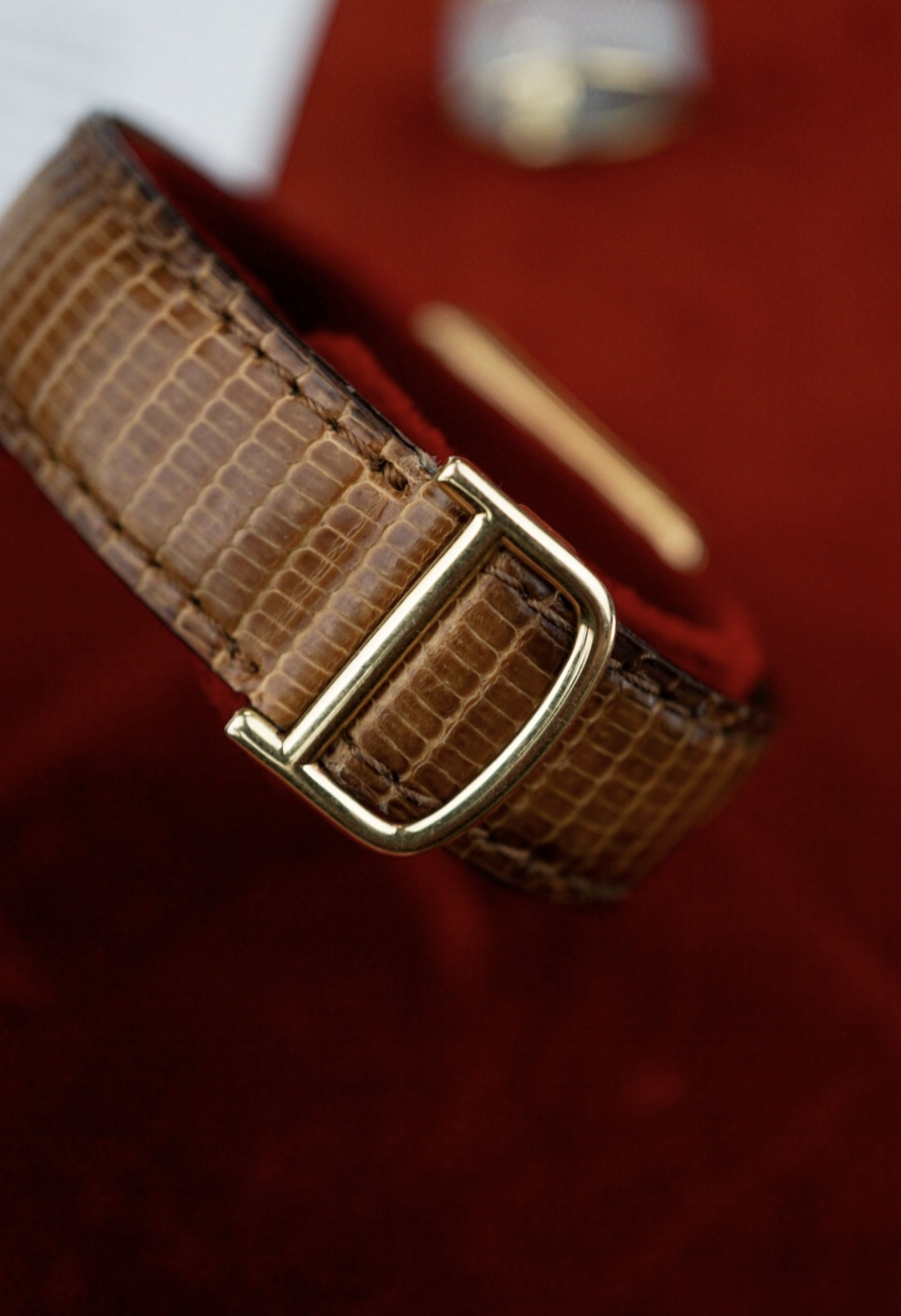
Case condition is the primary value driver. The brancards should show sharp, defined edges — over-polishing is the most common condition issue and is immediately visible to experienced collectors. Check the case back for "CARTIER PARIS" engraving and 750 gold hallmarks. The mineral glass crystal is period-correct; a sapphire crystal on a 78086 would indicate a non-original replacement. The Cal. 78-1 movement should be clean and well-regulated, with Cartier service markings if it has been through authorized maintenance. Original 18k gold deployant clasps signed Cartier add meaningful value — replacements are common.