01DIAL
The Secret Signature
Introduced 1977
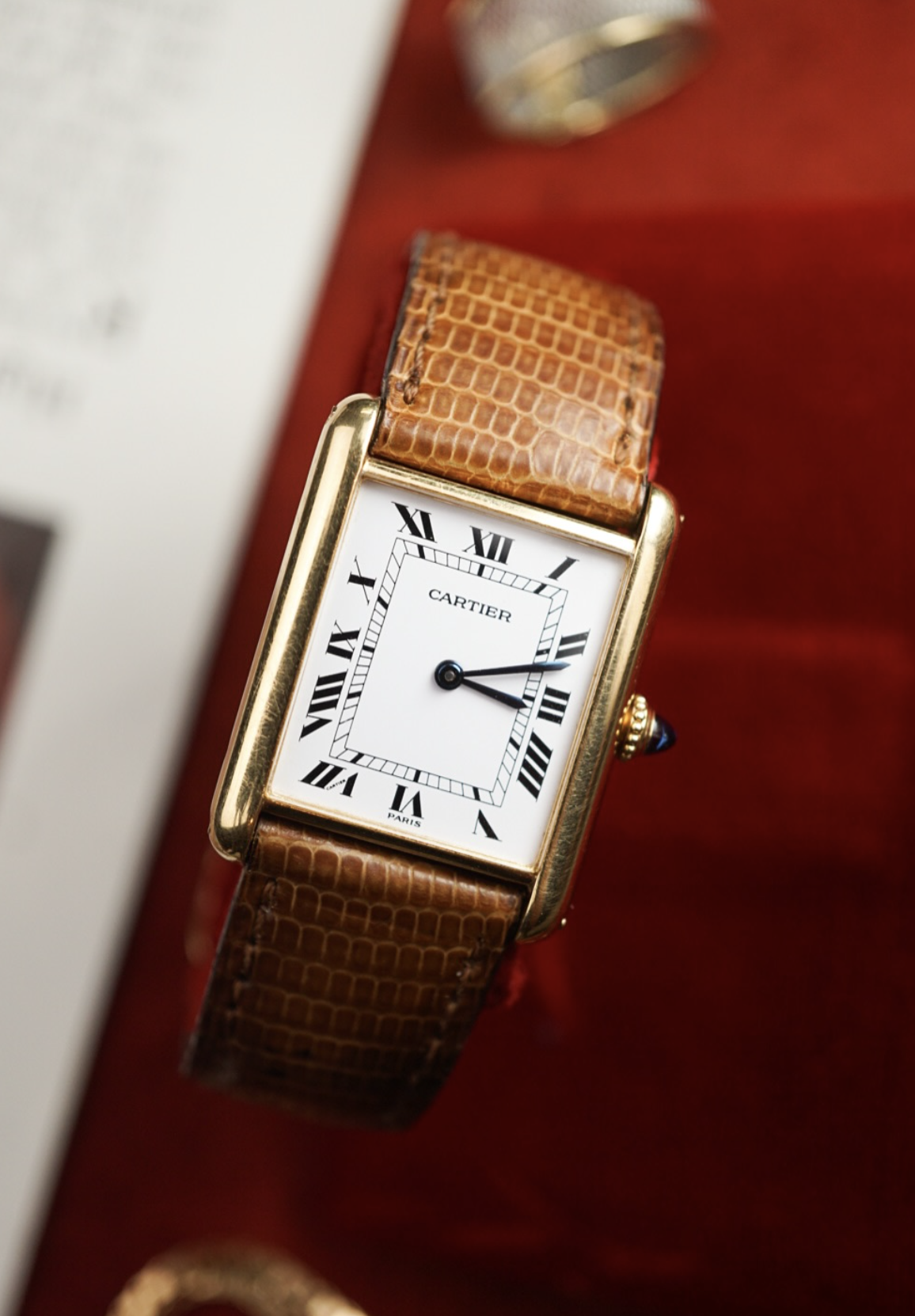
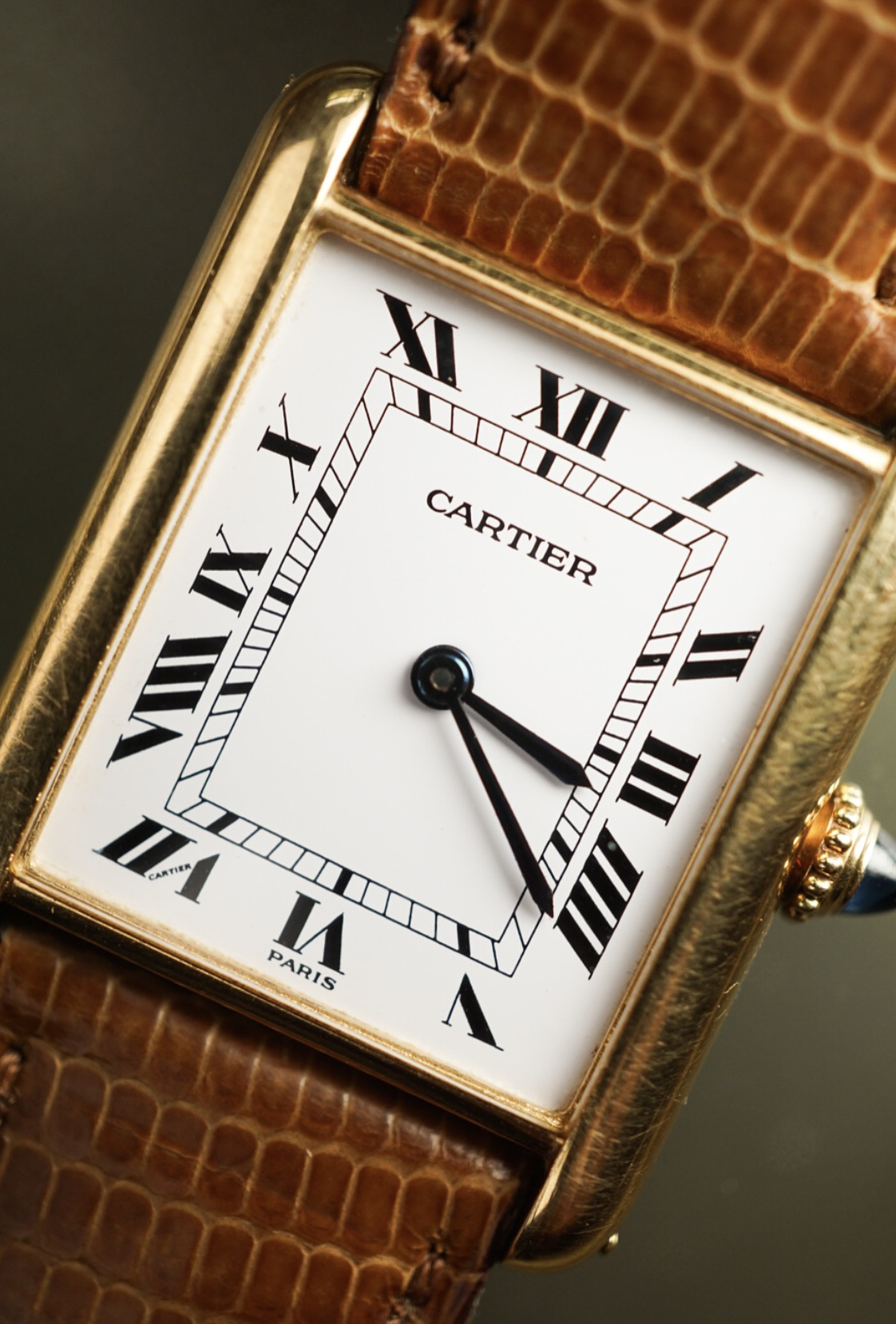
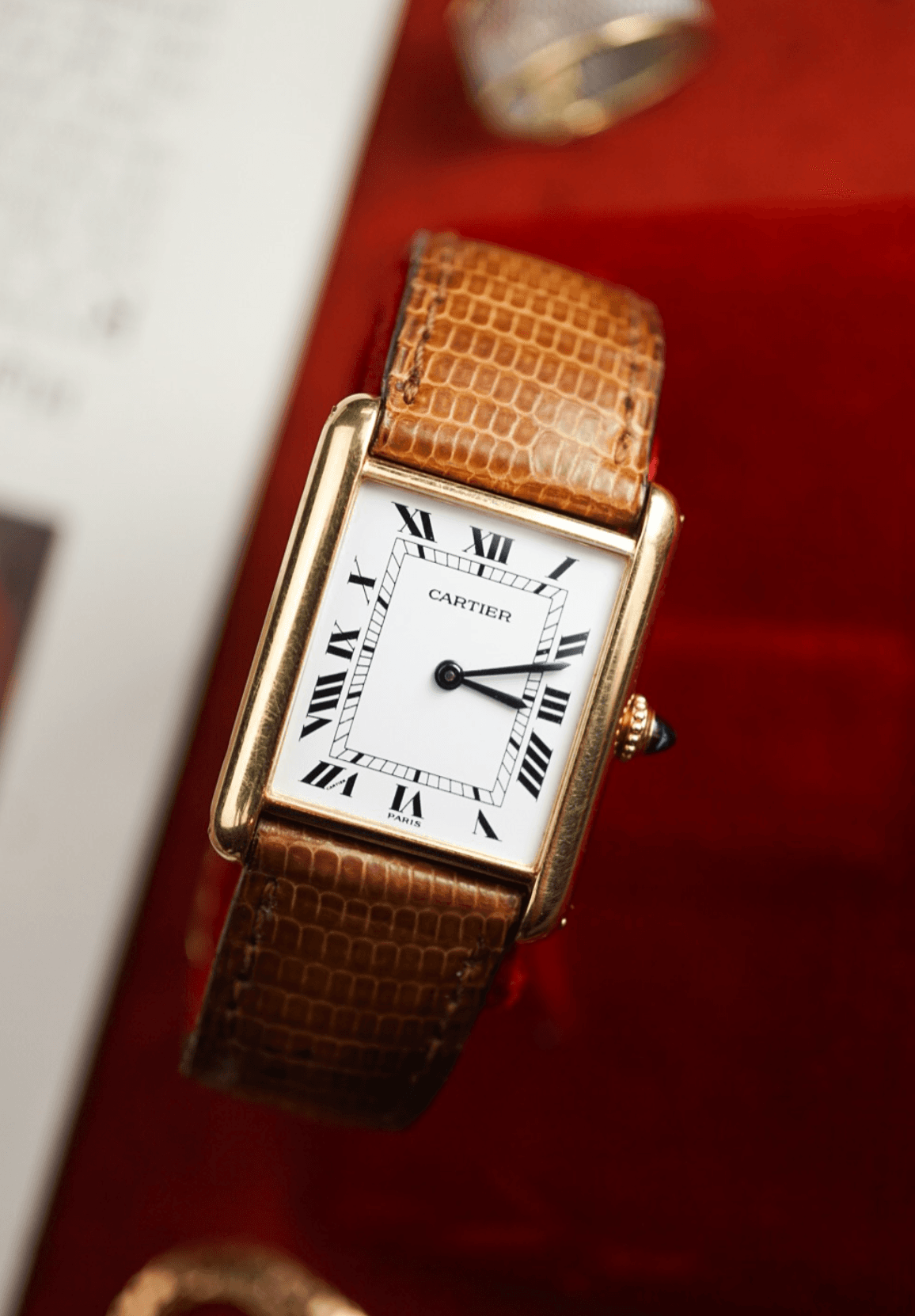
A microscopic 'CARTIER' hidden within the Roman numerals — present on every genuine post-1977 dial.
Cartier
The definitive rectangular dress watch, born from the geometry of war and perfected in the workshops of peace.
“I don't wear a Tank watch to tell the time. In fact, I never even wind it. I wear it because it is the watch to wear.”
— Andy Warhol
The Tank Louis Cartier is perhaps the single most important wristwatch design of the twentieth century. Conceived by Louis Cartier in 1917 and presented to General John Pershing of the American Expeditionary Force, the watch drew its architectural lines from the aerial silhouette of a Renault FT-17 tank — the brancards forming the case sides, the treads becoming the strap attachments.
What began as a gift between allies became a design language that would define an entire category of wristwatch. The Tank's geometry — clean verticals, a contained rectangle, Roman numerals arranged within a railroad track — owed nothing to the round pocket watches that preceded it and everything to the emerging Art Deco movement that would flourish in the decade to follow.
The Tank Louis Cartier has never truly been redesigned — only reinterpreted across materials, movements, and manufacturing eras. The earliest production pieces from the 1920s through the 1960s were handmade in Cartier's Parisian ateliers, each case finished individually with hand-applied brancards. These pieces are exceptionally rare and represent the purest expression of Louis Cartier's original vision.
The model's modern collectible era begins in the early 1970s with the Ref. 78086 — the quintessential gold Tank Louis with Paris hallmarks and a hand-wound Cal. 78-1 movement. These Parisian-era pieces, produced before Cartier consolidated manufacturing in Switzerland, are what most collectors mean when they speak of the "real" Tank Louis. The 78086 in particular — especially Paris-dial examples signed "CARTIER PARIS" — commands steady auction interest and represents the reference against which all other Tank Louis watches are measured.
The late 1970s brought the Must de Cartier program, which offered the Tank Louis in vermeil (gold-plated sterling silver) at a fraction of the solid gold price. Controversial at the time, this democratization introduced a generation to Cartier ownership and created the pipeline that feeds today's solid gold collector market. Must de Cartier Tanks in unusual dial colors — burgundy, blue, the tri-color "Trinity" pattern — have become vintage collectibles in their own right.
By the 1990s, production had shifted to Swiss centralized manufacture under the Richemont umbrella, introducing sapphire crystals, quartz movements, and new reference numbers. The quartz Tank Louis (such as Ref. 2441) divided purists but proved the design's durability: the Tank looked right regardless of what powered it.
For collectors, the Tank Louis Cartier represents a rare convergence: a design important enough to anchor a museum collection, accessible enough to wear daily, and varied enough across a century of production to reward deep study. The spread between entry-level vintage examples and exceptional early pieces spans several orders of magnitude — making it both an entry point for new collectors and a lifelong pursuit for specialists.
Ref. 78086 · c. 1970–1981
The definitive Tank Louis Cartier Ref. 78086 in 18k yellow gold with Paris hallmarks and manual-wind Cal. 78-1 — the 1970s reference that represents the last generation of hand-wound Tank production before the quartz transition. Visible through the exhibition caseback, the Frédéric Piguet caliber balances classical rectangular proportions with understated mechanical luxury. This reference remains the benchmark against which every subsequent Tank Louis is measured and continues to attract steady auction interest from serious collectors.
6 documented references across 2 eras
| Reference | |
|---|---|
 | Ref. 78086 |
| Ref. 8810 | |
 | Ref. 96019 |
| Reference | |
|---|---|
 | Ref. 2441 |
| Ref. 2441C | |
 | Ref. 2442 |
What every buyer, inheritor, and first-time collector should know.
Coming soon — vetted dealer listings for Tank Louis Cartier.
Introduced 1977
A microscopic 'CARTIER' hidden within the Roman numerals — present on every genuine post-1977 dial.
Varies by era
Genuine Cartier cases bear specific hallmarks including the Cartier name, reference number, serial number, and precious metal assay marks. Placement and style varies by era, with earlier pieces showing different hallmark configurations than modern examples.
Varies by era and model
Cartier sourced movements from various Swiss manufacturers throughout history, including Jaeger-LeCoultre, Frédéric Piguet, ETA, and in-house production. Knowing the correct caliber for a specific reference is essential for authentication and establishing provenance.
A Cartier hallmark since the early 20th century
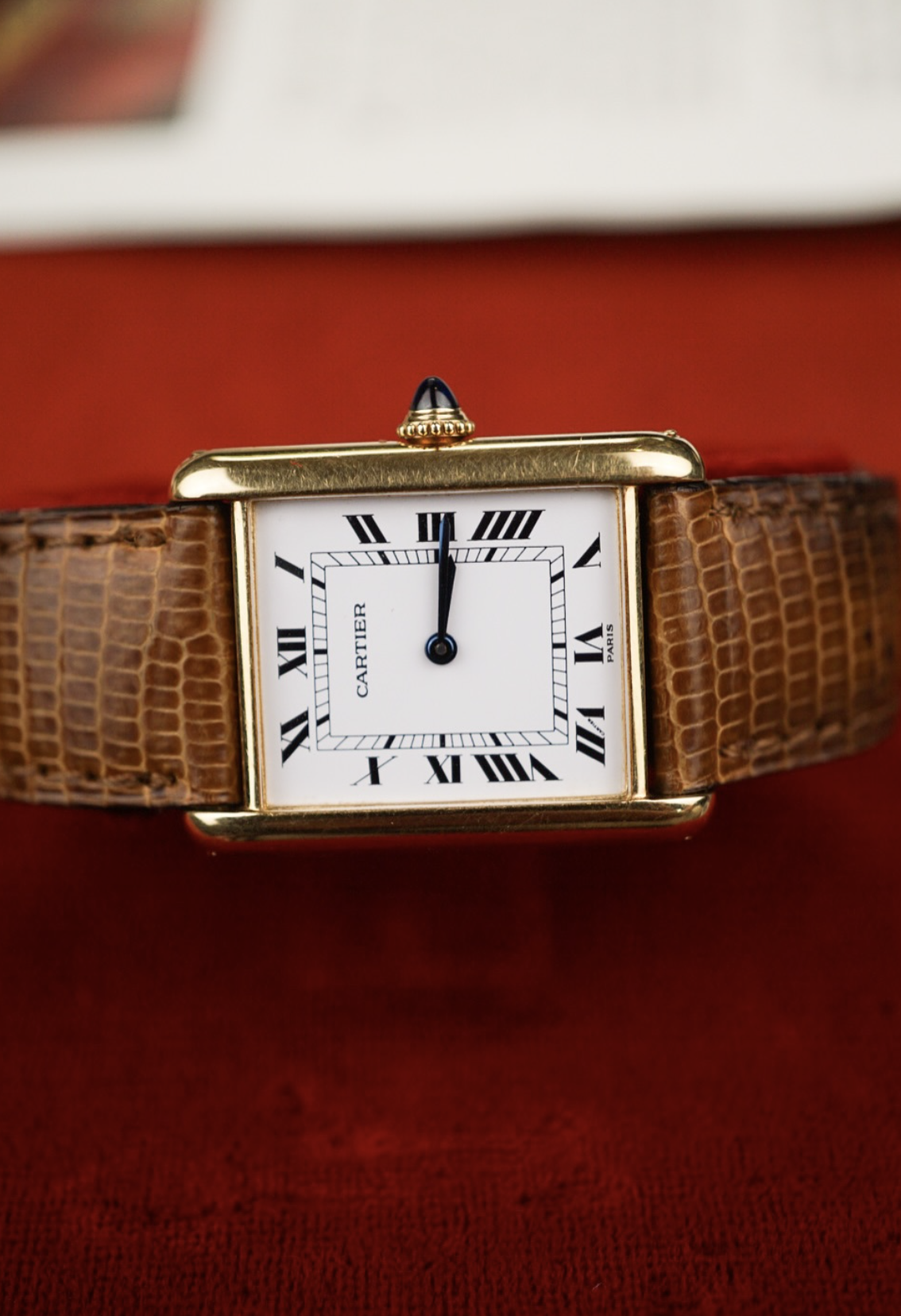
The blue sapphire (or spinel on less precious models) cabochon crown is a Cartier signature. Original crowns show consistent color saturation and are set flush with the crown body. Replacements often show misalignment or incorrect stone dimensions that reveal themselves under magnification.
Check the clasp first
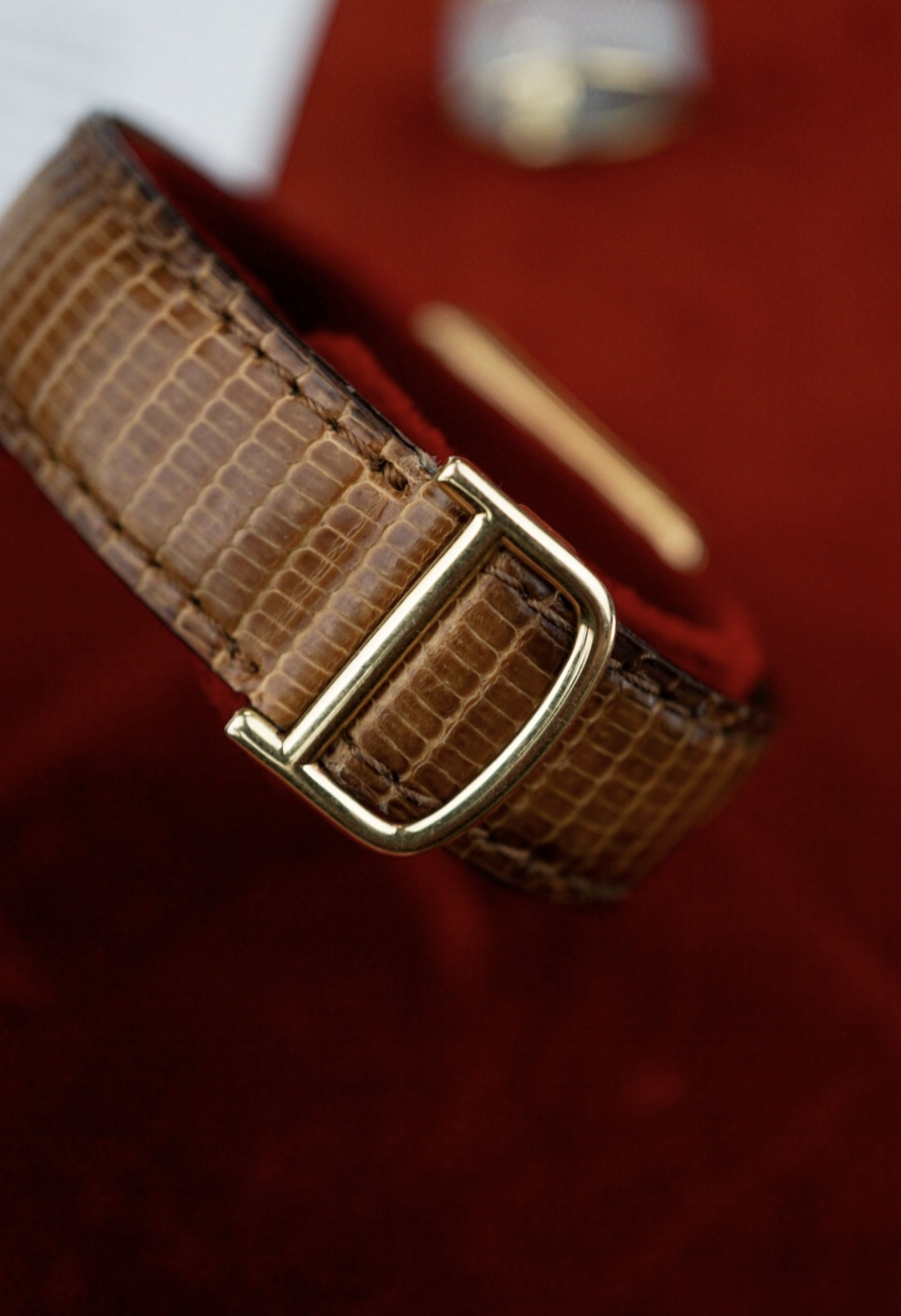
Cartier bracelets carry their own reference markings and the deployment clasp should bear the Cartier name and logo. Aftermarket bracelets are extremely common on vintage pieces, so verifying clasp authenticity and matching reference numbers is crucial to overall authentication.
Patina tells the story
Vintage Cartier dials develop characteristic aging—cream dials warm to ivory, lacquer dials may develop fine crazing, and applied indices can show legible wear patterns. Understanding acceptable versus concerning dial aging is key to valuing a vintage piece authentically.
Coming soon — price trends and comparable sales for Tank Louis Cartier.
Find out what it is, what it's worth, and whether to keep, insure, or sell it.
START HERE →BUYERKnow what to look for, what to avoid, and what to pay.
CHECK BEFORE YOU BUY →SELLERPrice it right with current comparable sales, condition grading, and value drivers.
PRICE MY WATCH →