01DIAL
The Secret Signature
Introduced 1977
A microscopic 'CARTIER' hidden within the Roman numerals — present on every genuine post-1977 dial.
Cartier
The elongated oval that defined women's Cartier watchmaking.
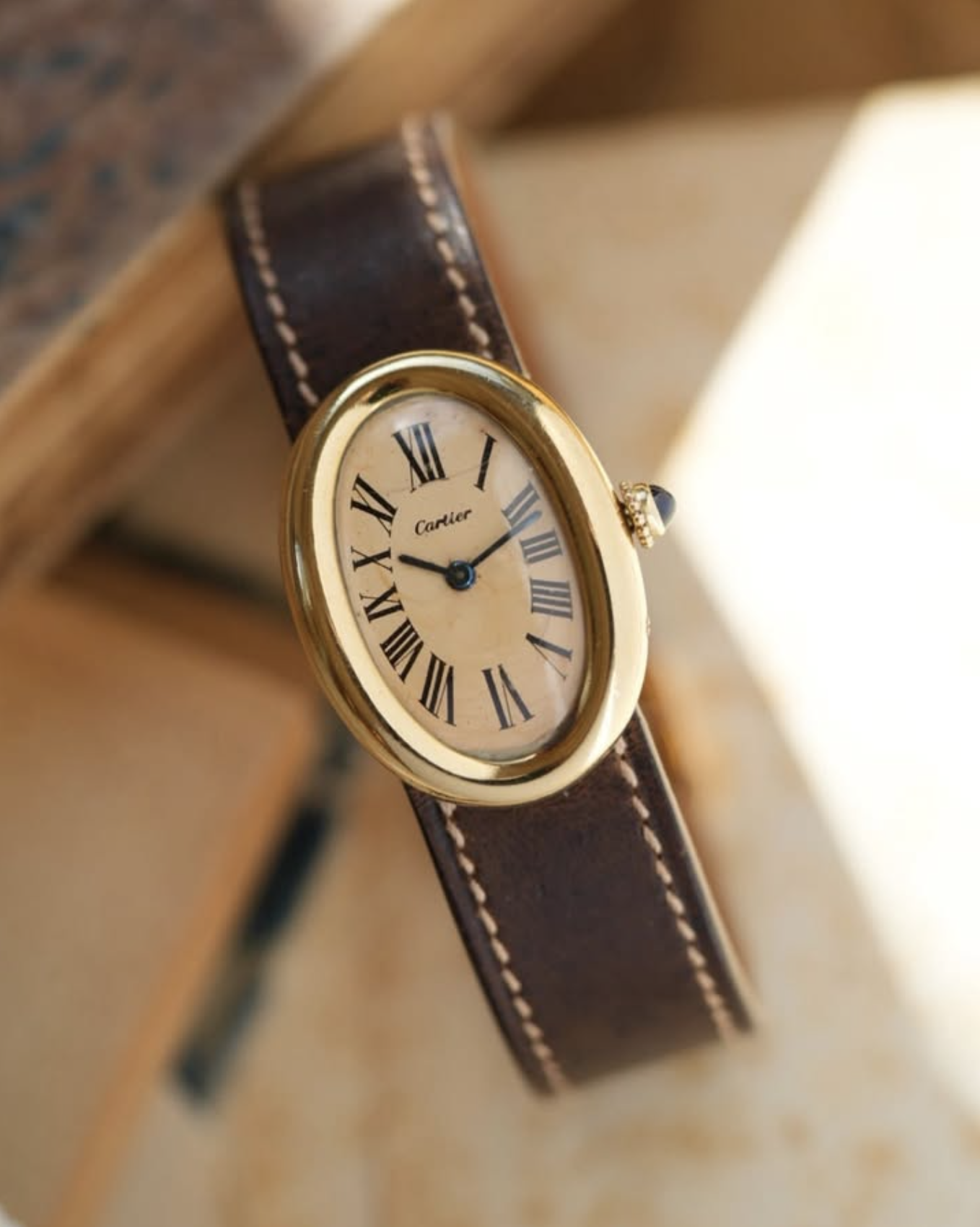
The Baignoire ("bathtub") emerged in 1912 alongside its companion, the Tortue. While the Tortue maintained a more compact oval, the Baignoire was conceived as an elongated interpretation of the same form language—Cartier's response to the Art Deco embrace of geometric shapes and the era's growing interest in watches designed specifically for women.
The Baignoire's distinctive silhouette became one of Cartier's most recognizable signatures. Its elongated oval case, with gently curved sides and rounded lugs, created a watch that was simultaneously bold and elegant. The proportions suggested luxury without aggression: a watch that announced its wearer's taste rather than her wrist.
Like many pre-war Cartier designs, the Baignoire faded during and immediately after World War II. Its reintroduction came in the late 1950s and early 1960s, when Cartier began systematically revisiting its historical archives. Ref. 7672, launched c. 1960, represented the house's refined understanding of mid-century watchmaking—smaller than many contemporary women's watches, precisely constructed, and paired with Jaeger-LeCoultre's reliable manual-wind movements.
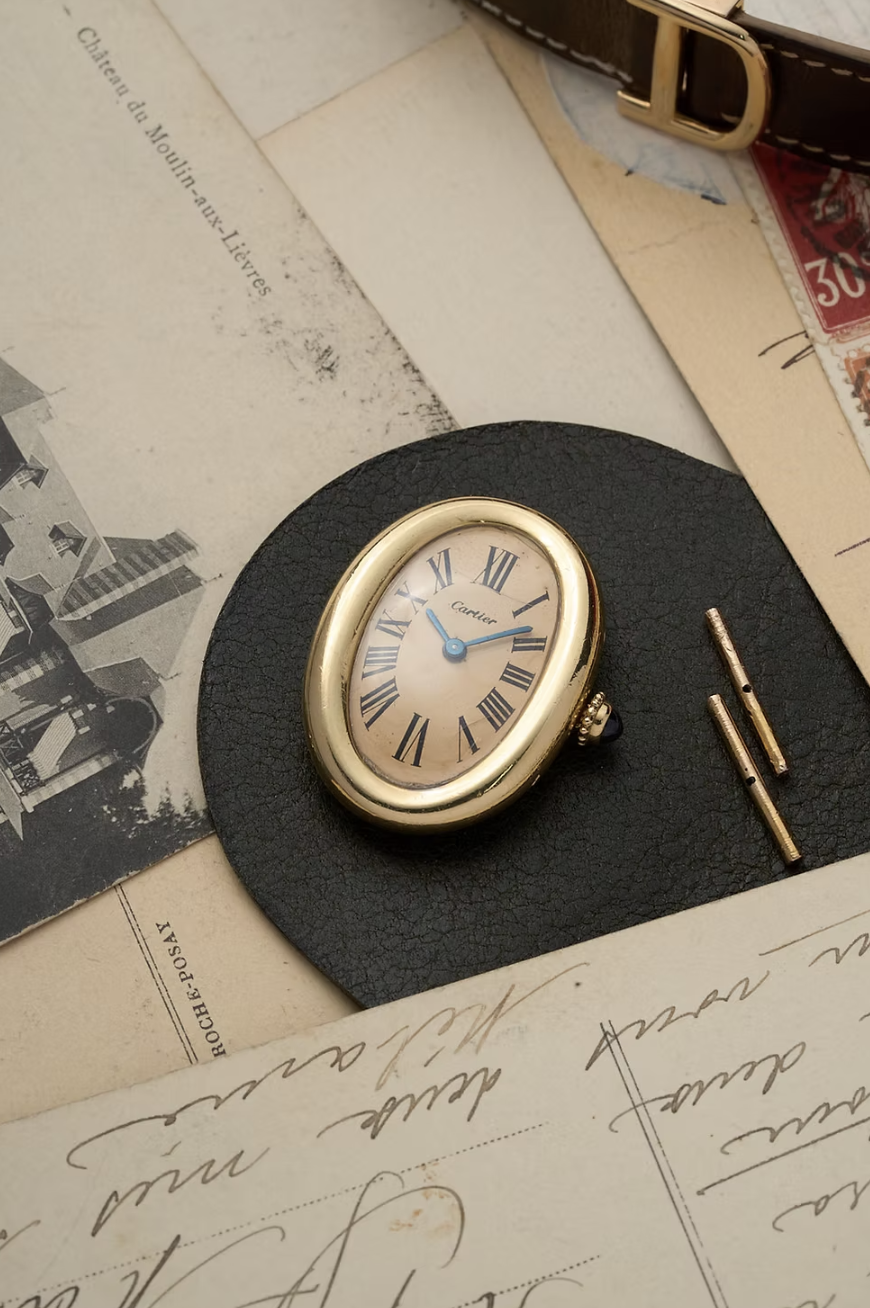
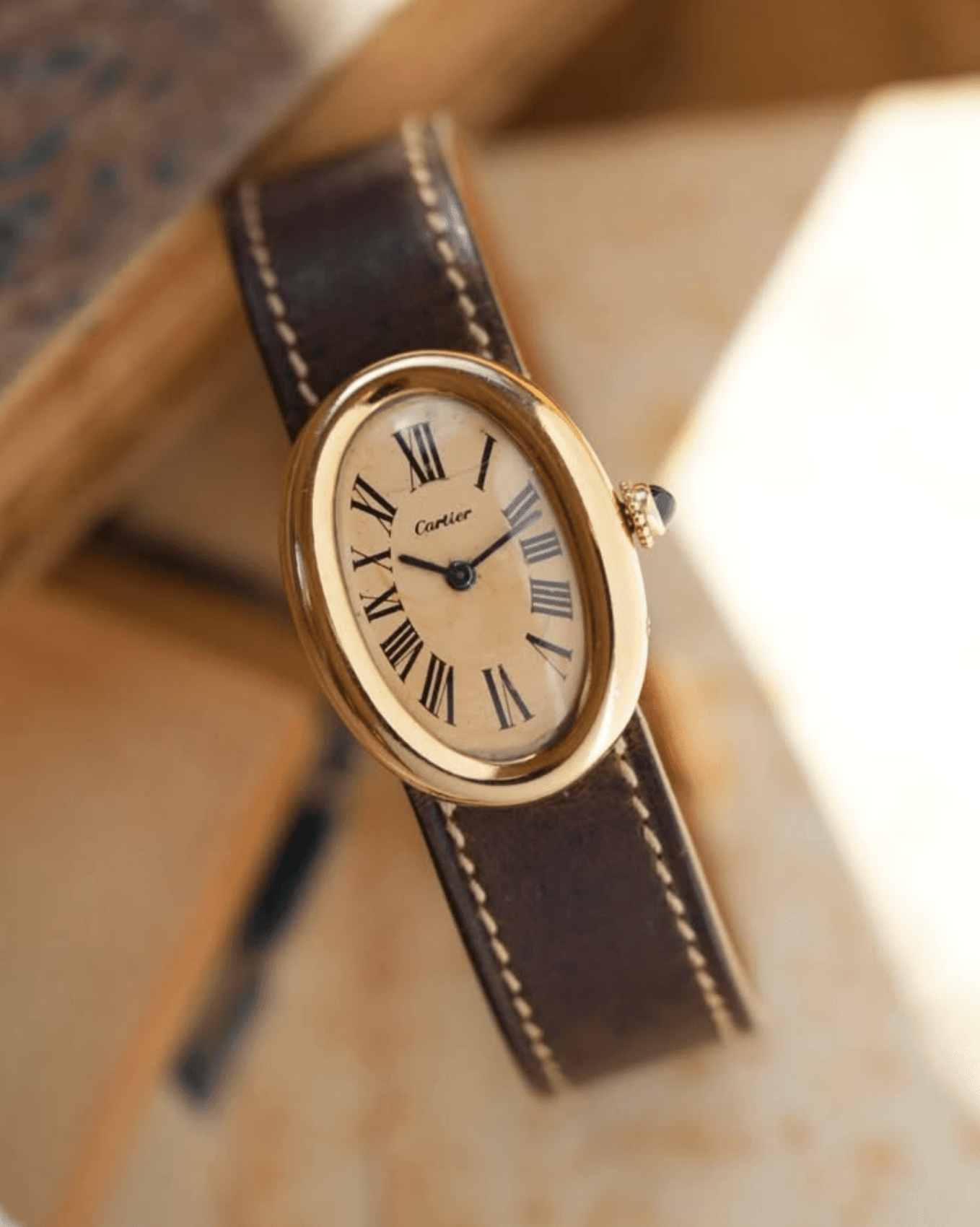
These post-war examples were crafted almost exclusively in 18k gold (primarily yellow gold), with cream or silver dials featuring Roman numerals. The characteristic blue sword hands and blue sapphire cabochon crown became hallmarks of the design. The case dimensions—approximately 31 × 23 mm—were generous for the era's women's watches but remained refined by modern standards.
The Ref. 7672 attracted a particular clientele: cultured women who understood Cartier's heritage and valued restraint over ostentation. One notable owner was Oona O'Neill Chaplin, widow of Charlie Chaplin. A Ref. 7672 from her collection sold at Sotheby's for $34,290, confirming the model's status within Cartier's women's watch hierarchy.
Around 1969, Cartier introduced the Baignoire Allongée—a radical reinterpretation of the original design. Where the Ref. 7672 was refined, the Allongée was provocative. Its case proportions stretched to approximately 52 × 22 mm, transforming the Baignoire's measured elegance into something almost surreal. The oval became hyperelongated, a thin ribbon of metal and crystal wrapped around the wrist.
This was not a practical design decision. The Allongée was Cartier's declaration that women's watches could be conceptual art objects, not mere jewelry scaled down from men's designs. The movement remained modest—a manual-wind JLC caliber—but the case overwhelmed it with its ambition.
The Allongée remained in production for a limited time and in small numbers. Unlike the Ref. 7672, which can be found with relative frequency among vintage dealers, the Allongée is genuinely rare. It carries no standardized reference number, existing in Cartier's archives and collector consciousness primarily by its descriptive name.
The Baignoire Allongée's true historical significance emerges in relation to Rupert Emmerson's Crash, introduced in 1991. When Emmerson was tasked with creating an asymmetric, "melted" watch case that defied convention, he drew directly from the Allongée's radical proportions. The Crash's distinctive form—with its off-center crystal and warped geometry—can be traced to the Allongée's elongated oval.
In essence, the Allongée is the design ancestor of one of Cartier's most iconic modern watches. Collectors of the Crash often seek out the Allongée as a precursor, a watch that demonstrates how far Cartier's women's division was willing to push proportion and form.
The Baignoire sits at a fascinating intersection in the vintage Cartier market. The Ref. 7672 represents accessible collecting—genuine vintage gold watches that rarely exceed $8,000–15,000 at auction, with many examples priced substantially lower. Its value lies in design heritage and materials rather than technical innovation. The movement is straightforward, the construction is solid but not exceptional by modern standards, and the historical significance is real but niche.
The Allongée operates in a different economy entirely. Its rarity, its conceptual boldness, and its role as the Crash's design ancestor have made it a serious collector pursuit. These watches appear infrequently on the market and command substantial premiums when they do. Their value is tied almost entirely to design provenance and the mythology they carry.
For the inheritor or buyer, the critical question is authentication. Baignoires have been produced across multiple eras with varying specifications. Reference numbers, dial treatments, movement details, and case construction all offer clues to dating and originality. A well-documented example with original dial, crown, and case condition represents genuine value; a refinished or heavily restored piece is primarily a wearable object with limited collectibility.
The Baignoire endures because it embodies a particular moment in watchmaking history—when women's watches could be serious design objects, when proportion and form mattered as much as precision, and when Cartier's jewelry heritage and watchmaking expertise merged into something distinctive.
Ref. 7672 · c. 1960
The definitive post-war Baignoire in 18k yellow gold with cream dial, Roman numerals, and blue sword hands — the reference that established the model's modern identity in the 1960s. Hand-wound by a reliable Jaeger-LeCoultre caliber, this refined interpretation balances classical proportions with understated luxury. Notable examples from prominent collections have commanded substantial prices at auction, confirming the Ref. 7672's status as the benchmark vintage Baignoire.
3 documented references across 3 eras
| Reference | |
|---|---|
 | Ref. 7672 |
| Reference | |
|---|---|
| Ref. Baignoire Allongée |
| Reference | |
|---|---|
| Ref. 1954 |
What every buyer, inheritor, and first-time collector should know.
Coming soon — vetted dealer listings for Cartier Baignoire.
Introduced 1977
A microscopic 'CARTIER' hidden within the Roman numerals — present on every genuine post-1977 dial.
Varies by era
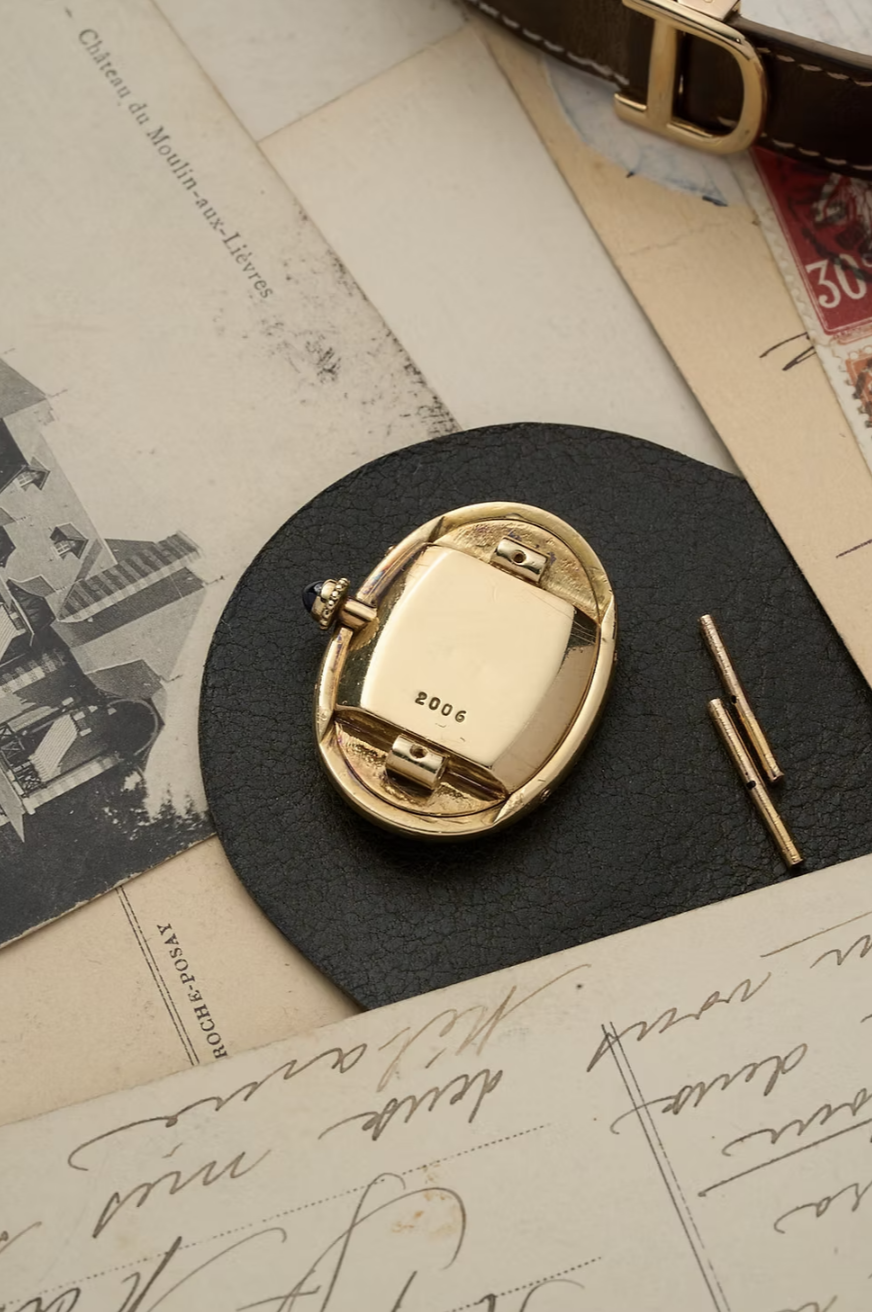
Genuine Cartier cases bear specific hallmarks including the Cartier name, reference number, serial number, and precious metal assay marks. Placement and style varies by era, with earlier pieces showing different hallmark configurations than modern examples.
Varies by era and model
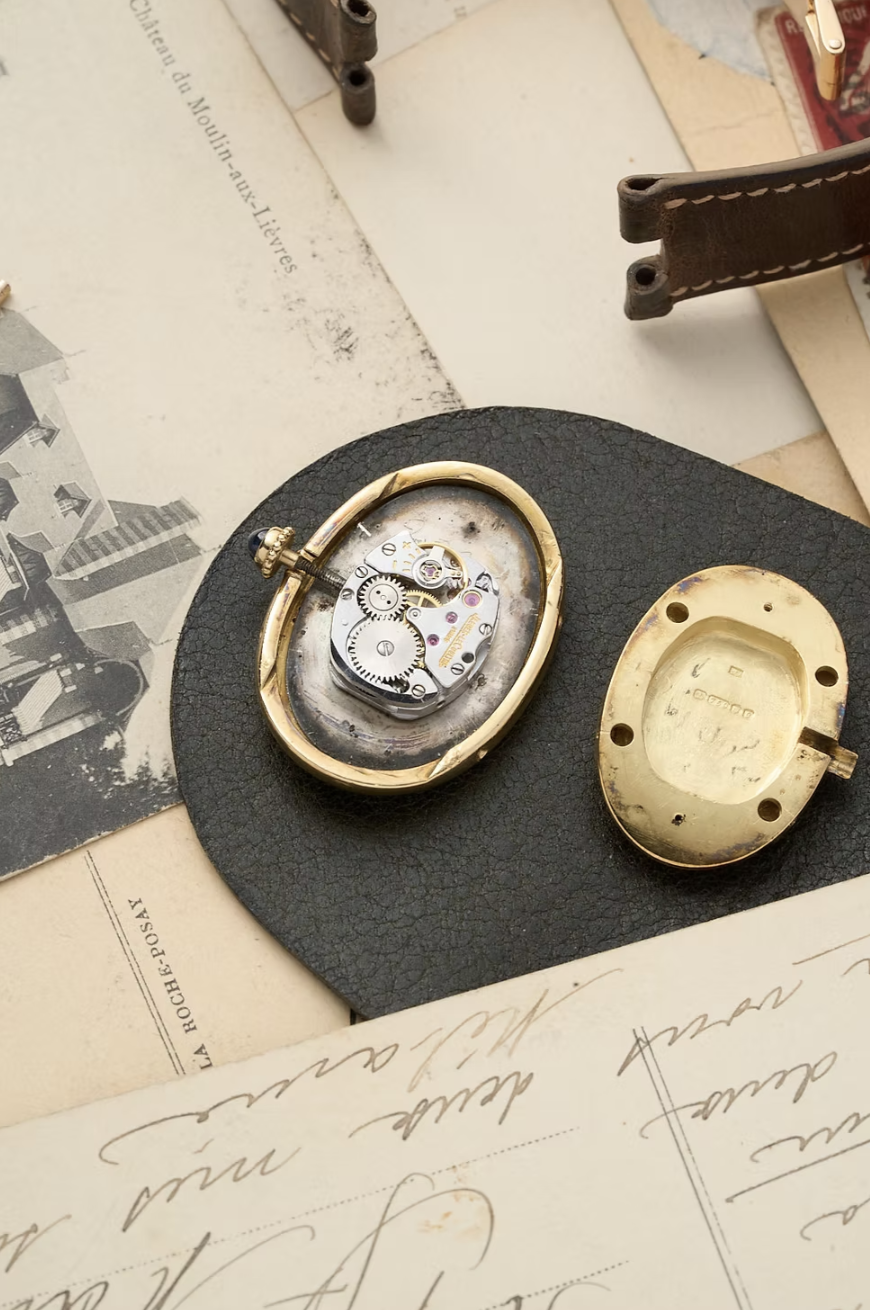
Cartier sourced movements from various Swiss manufacturers throughout history, including Jaeger-LeCoultre, Frédéric Piguet, ETA, and in-house production. Knowing the correct caliber for a specific reference is essential for authentication and establishing provenance.
A Cartier hallmark since the early 20th century
The blue sapphire (or spinel on less precious models) cabochon crown is a Cartier signature. Original crowns show consistent color saturation and are set flush with the crown body. Replacements often show misalignment or incorrect stone dimensions that reveal themselves under magnification.
Check the clasp first
Cartier bracelets carry their own reference markings and the deployment clasp should bear the Cartier name and logo. Aftermarket bracelets are extremely common on vintage pieces, so verifying clasp authenticity and matching reference numbers is crucial to overall authentication.
Patina tells the story
Vintage Cartier dials develop characteristic aging—cream dials warm to ivory, lacquer dials may develop fine crazing, and applied indices can show legible wear patterns. Understanding acceptable versus concerning dial aging is key to valuing a vintage piece authentically.
Coming soon — price trends and comparable sales for Cartier Baignoire.