01DIAL
The Secret Signature
Introduced 1977
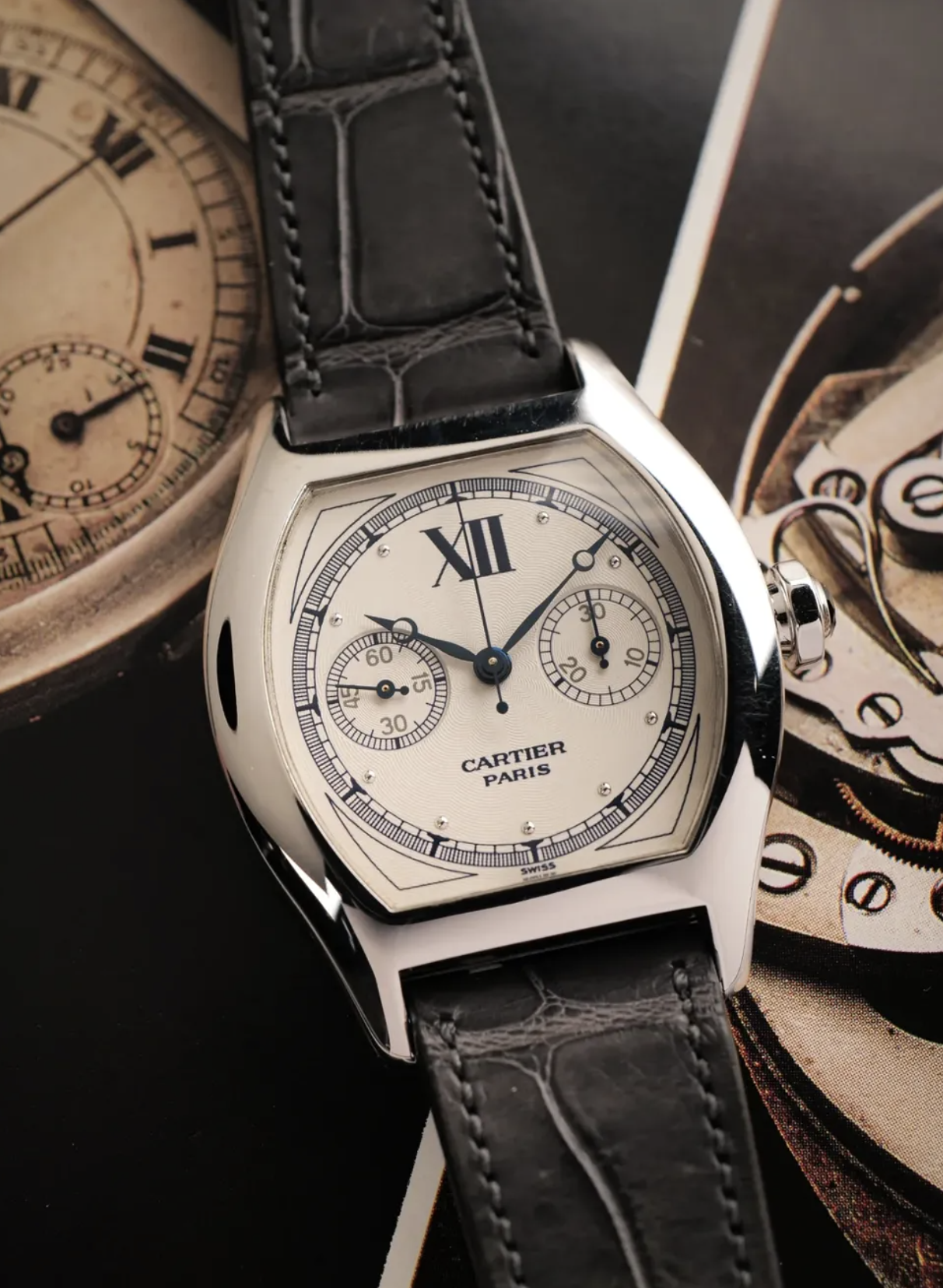
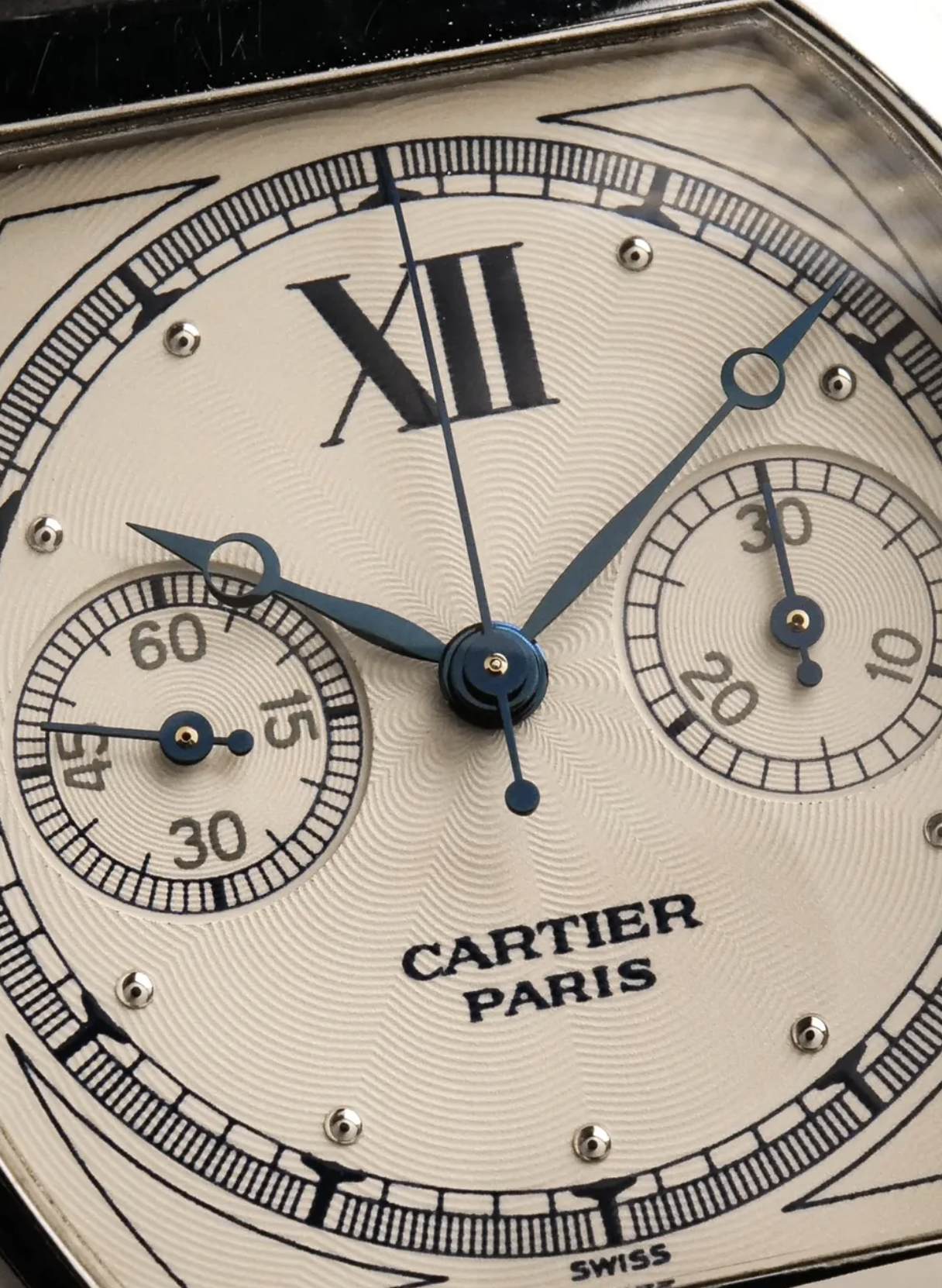
A microscopic 'CARTIER' hidden within the Roman numerals — present on every genuine post-1977 dial.
Cartier
Cartier's shaped-case innovation that predates the Tank, the tonneau Tortue represents one of watchmaking's most enduring silhouettes.
The Cartier Tortue—named for its tortoise-shell inspired tonneau case—was first produced in 1912, making it one of Cartier's oldest continuously recognized shaped watches. It arrived a decade before the Tank and represents a pivotal moment in watch design: the transition from purely round cases to geometric forms that balanced aesthetics with wrist ergonomics.
Where the Tank married Cartier's Art Deco aesthetic with architectural precision, the Tortue evolved organically from the natural curves of the barrel. Its gently curved lugs and refined proportions created a watch that felt as elegant on the wrist as it appeared on the dial. For much of the 20th century, the Tortue remained Cartier's answer to a sport-leaning dress watch—a template that persisted through economic upheaval, war, and sweeping changes in watchmaking taste.
The tonneau case shape predates the Tank itself. Cartier adopted it deliberately: the barrel form sits naturally on the wrist, its width diminishing toward the lugs creates visual grace rather than the geometric austerity of rectangular designs. The Tortue's case is typically 28–32 mm wide and slightly taller in height, creating an impression of elongation that balanced proportions on smaller wrists—a consideration that mattered profoundly before modern sizing conventions.
Throughout the early-to-mid 20th century, Tortue examples appeared in yellow and white gold, often with simple dial designs centered on Roman numerals and blue sword hands. The watch was never a high-volume production, which is why Tortue references today occupy a quieter corner of the Cartier market—no less significant than a Tank, but less familiar to new collectors.
The story of the Tortue shifted in the late 1990s when Cartier's Collection Privée Cartier Paris (CPCP) program revived the model with a remarkable mechanical complication: the Ref. 2396 Monopoussoir Chronograph. This reference became a watershed moment for the Tortue, positioning it not as a vintage relic but as a platform for micro-rotor innovation and single-button chronograph mechanics.
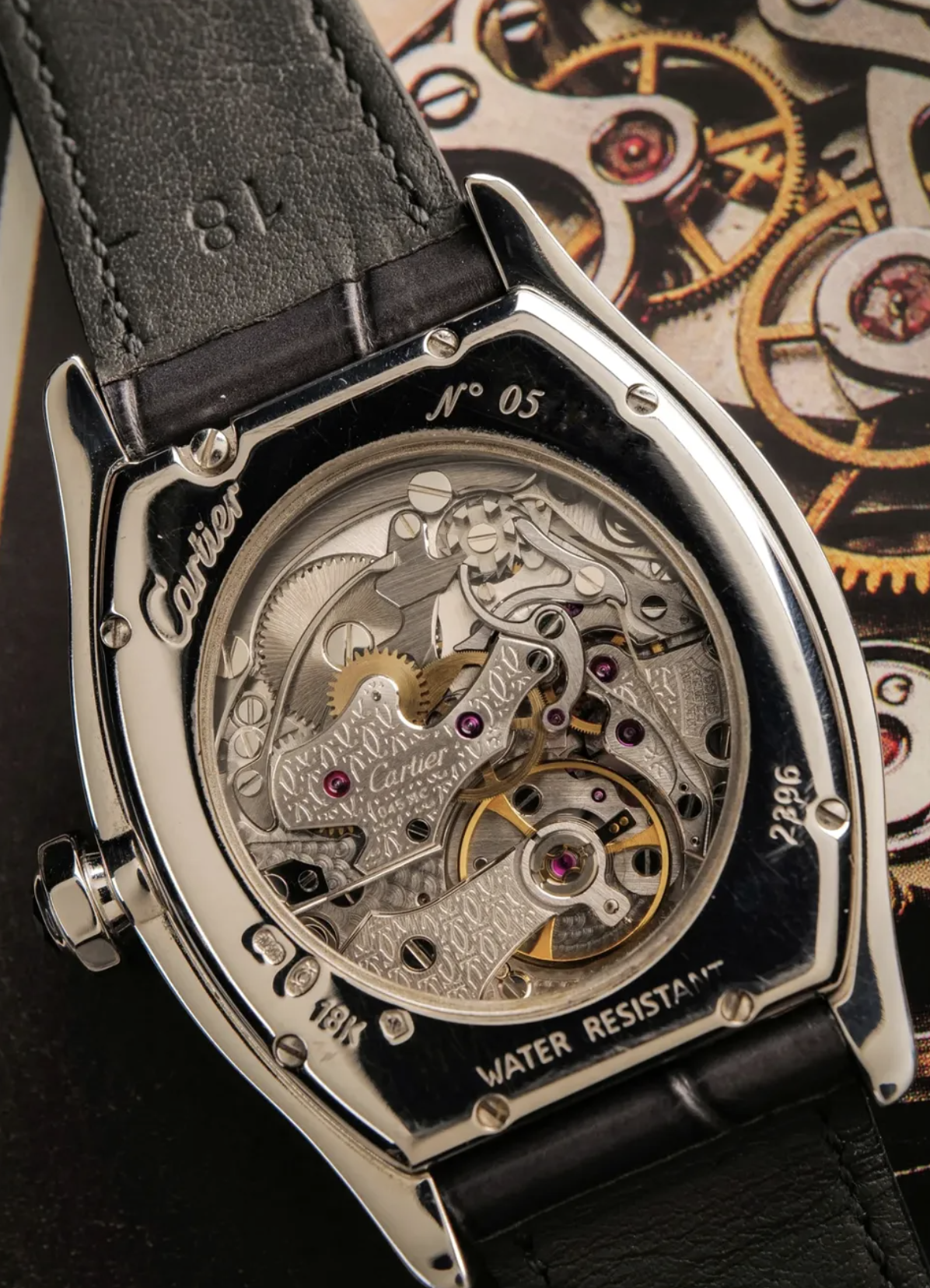
The Ref. 2396 is a tournament-grade watch in every dimension. Its 34 × 43 mm case houses a manually wound Cartier Cal. 045MC (derived from Piaget's 1285P movement), a 22-jewel architecture capable of delivering 45-minute timing precision through two clean sub-dial counters. The movement is visible through a mineral caseback, inviting inspection of the blued screws and geometric balance that characterizes refined watchmaking. Only the rarest Cartier sport complications can match this specification—a monopoussoir chronograph in an atypical size, dressed in white gold, is genuinely uncommon.
The Tortue attracts two distinct collector archetypes: those who prize the original tonneau form and seek early examples that showcase the model's foundational design, and those captivated by the CPCP revival, where Cartier's technical ambitions overcame commercial conservatism.
Early Tortue references, such as the Ref. 96069 from the 1970s, are prized for their adherence to the original proportions and pure aesthetic. These watches feel historical, almost archival in their restraint—a dial, case, and movement designed to work in concert without excess. Finding one in original condition is increasingly rare; many have been refinished, served, or polished back into anonymous condition.
Late-20th-century CPCP examples, by contrast, celebrate the Tortue as a canvas for complication. These references are sought for movement integrity, provenance documentation, and the inherent prestige of a privately-issued Cartier watch. A CPCP Tortue Chronograph in its original packaging represents a significant collector milestone.
When evaluating a Tortue, condition of the case tonneau shape is paramount. Polishing, dents, or case alteration compromise the geometry that defines the model. Dial originality is equally critical—original dials in cream or silver-white, with period-appropriate indices and hand colors, are scarce. Refinished dials are common and significantly reduce value.
For mechanical movements, seek watches with documented service history, factory markings clearly visible, and chronograph mechanisms (if present) that function crisply. Original straps, whether crocodile or leather with period-correct buckles or deployants, preserve the watch's integrity and marketability.
The Tortue is not a watch to purchase for investment momentum. It is purchased for the quiet satisfaction of owning a shaped-case timepiece that connects directly to Cartier's early-20th-century innovation and, in certain references, represents a high point of contemporary mechanical watchmaking complexity.
Ref. 2396 · c. 1999–2000
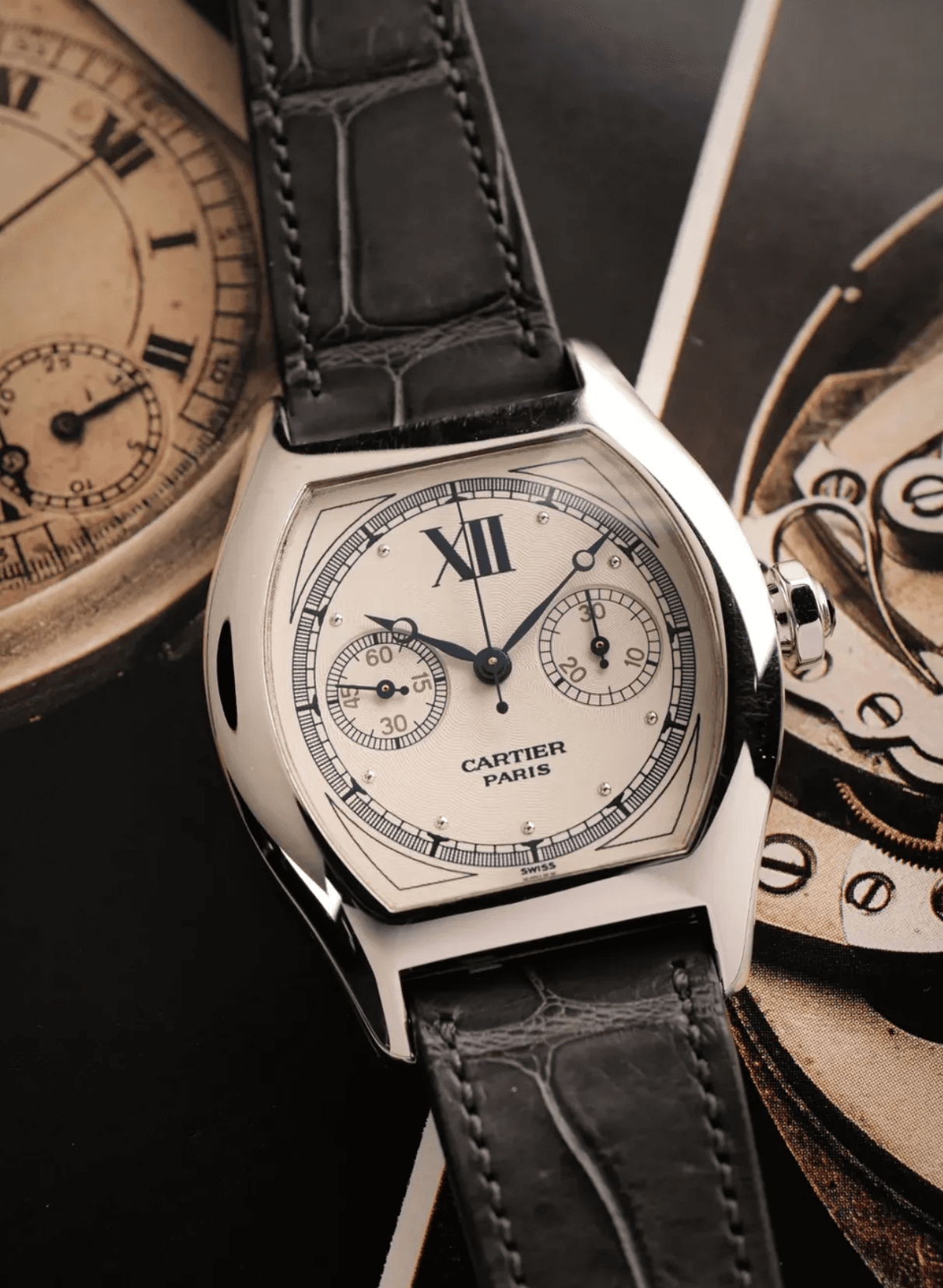
The Ref. 2396 CPCP Monopoussoir Chronograph from 1999 — the watershed moment that repositioned the 1912 Tortue as a platform for mechanical sophistication rather than vintage relic. Housing a manually wound Cartier Cal. 045MC with two sub-dial counters in a 34 × 43 mm white gold case, it represents a rare instance of Cartier prioritizing technical ambition over commercial conservatism. Only the most discerning collectors seek CPCP sport complications; this reference stands among the finest.
3 documented references across 2 eras
| Reference | |
|---|---|
| Ref. 96069 |
| Reference | |
|---|---|
| Ref. 2356 | |
 | Ref. 2396 |
What every buyer, inheritor, and first-time collector should know.
Coming soon — vetted dealer listings for Cartier Tortue.
Introduced 1977
A microscopic 'CARTIER' hidden within the Roman numerals — present on every genuine post-1977 dial.
Varies by era
Genuine Cartier cases bear specific hallmarks including the Cartier name, reference number, serial number, and precious metal assay marks. Placement and style varies by era, with earlier pieces showing different hallmark configurations than modern examples.
Varies by era and model
Cartier sourced movements from various Swiss manufacturers throughout history, including Jaeger-LeCoultre, Frédéric Piguet, ETA, and in-house production. Knowing the correct caliber for a specific reference is essential for authentication and establishing provenance.
A Cartier hallmark since the early 20th century
The blue sapphire (or spinel on less precious models) cabochon crown is a Cartier signature. Original crowns show consistent color saturation and are set flush with the crown body. Replacements often show misalignment or incorrect stone dimensions that reveal themselves under magnification.
Check the clasp first
Cartier bracelets carry their own reference markings and the deployment clasp should bear the Cartier name and logo. Aftermarket bracelets are extremely common on vintage pieces, so verifying clasp authenticity and matching reference numbers is crucial to overall authentication.
Patina tells the story
Vintage Cartier dials develop characteristic aging—cream dials warm to ivory, lacquer dials may develop fine crazing, and applied indices can show legible wear patterns. Understanding acceptable versus concerning dial aging is key to valuing a vintage piece authentically.
Coming soon — price trends and comparable sales for Cartier Tortue.
You own a piece of Cartier's shaped-case heritage. Use the reference guide to identify your specific model, confirm its era, and assess restoration needs before any servicing.
START HERE →BUYERCompare condition, reference rarity, and movement integrity across listings. Verify CPCP markings and dial originality. Check for common polishing or dial refinish signs.
CHECK BEFORE YOU BUY →SELLERHighlight your Tortue's rarity within the shaped-case Cartier landscape. Document movement condition, original dial state, and any factory documentation. Original straps are a significant asset.
PRICE MY WATCH →