01DIAL
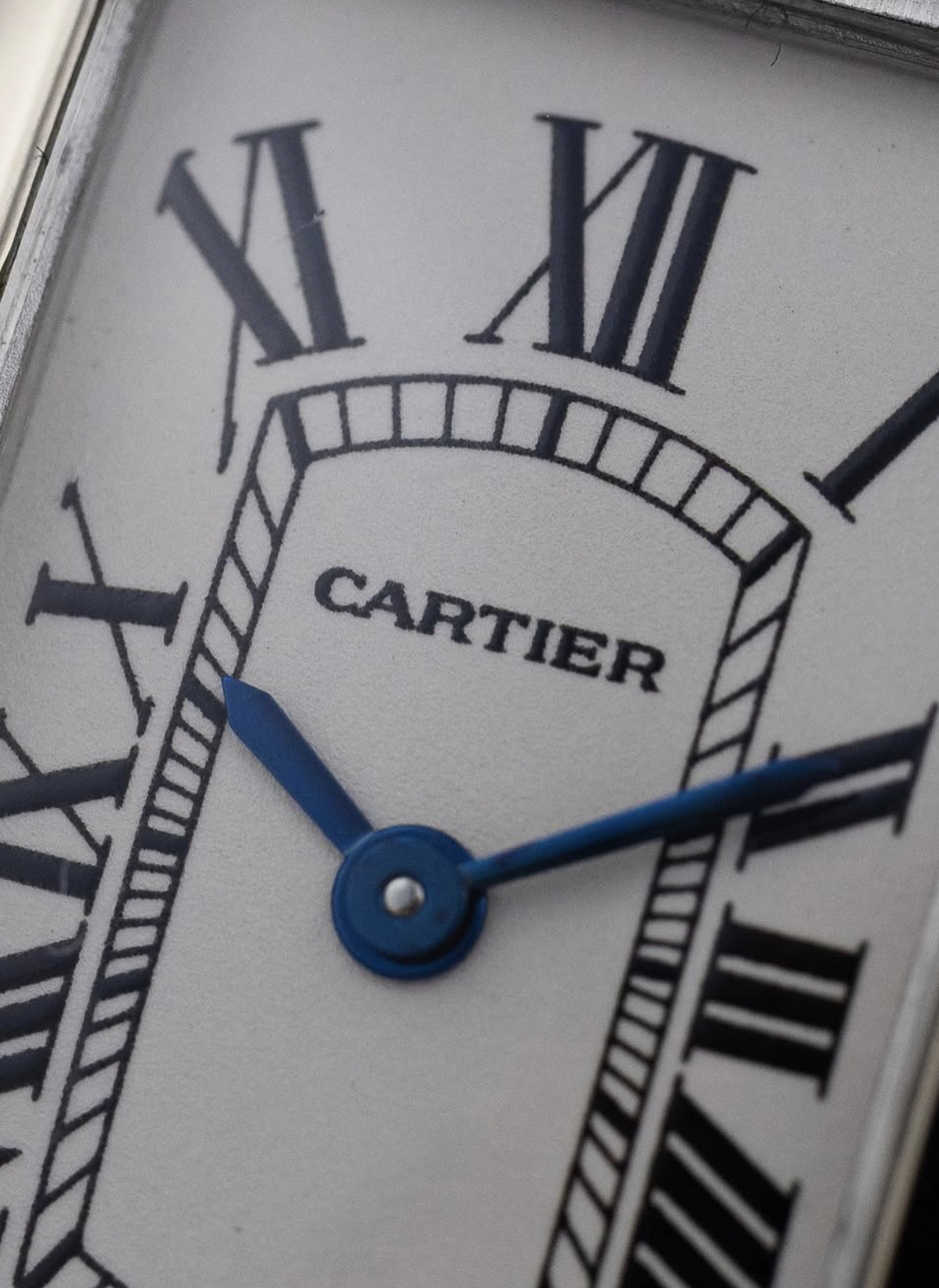
The Secret Signature
Introduced 1977
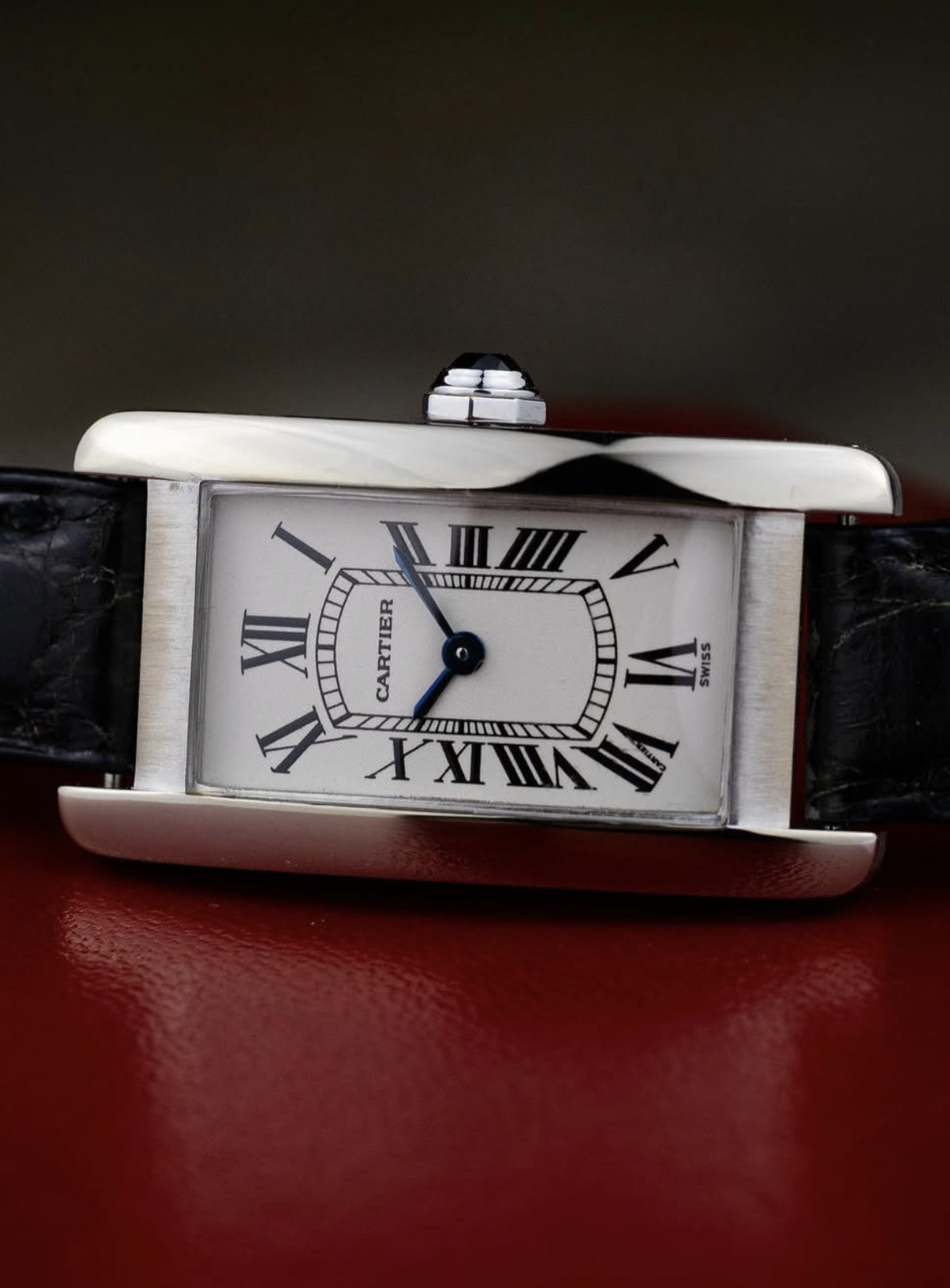
A microscopic 'CARTIER' hidden within the Roman numerals — present on every genuine post-1977 dial.
Cartier
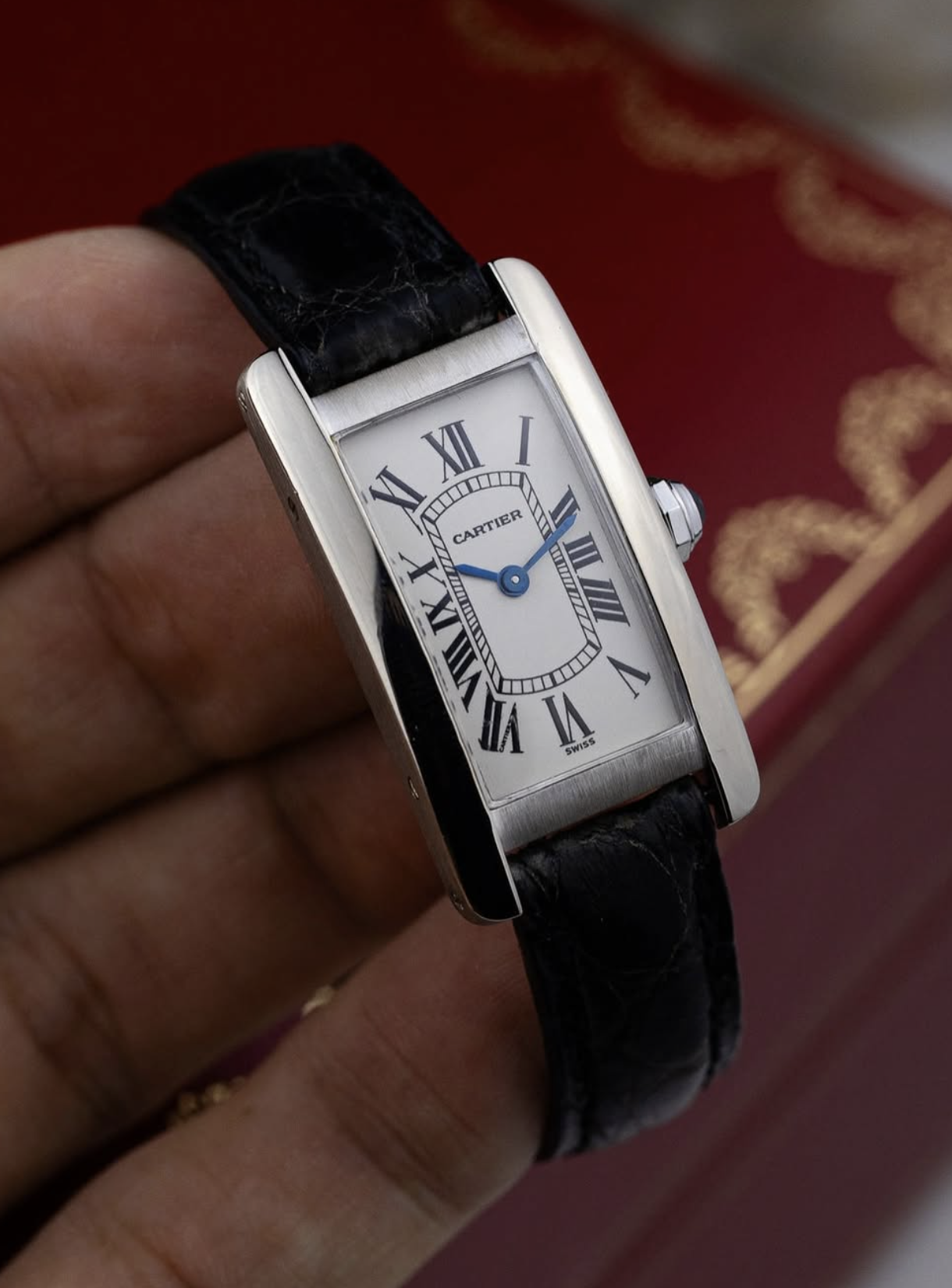
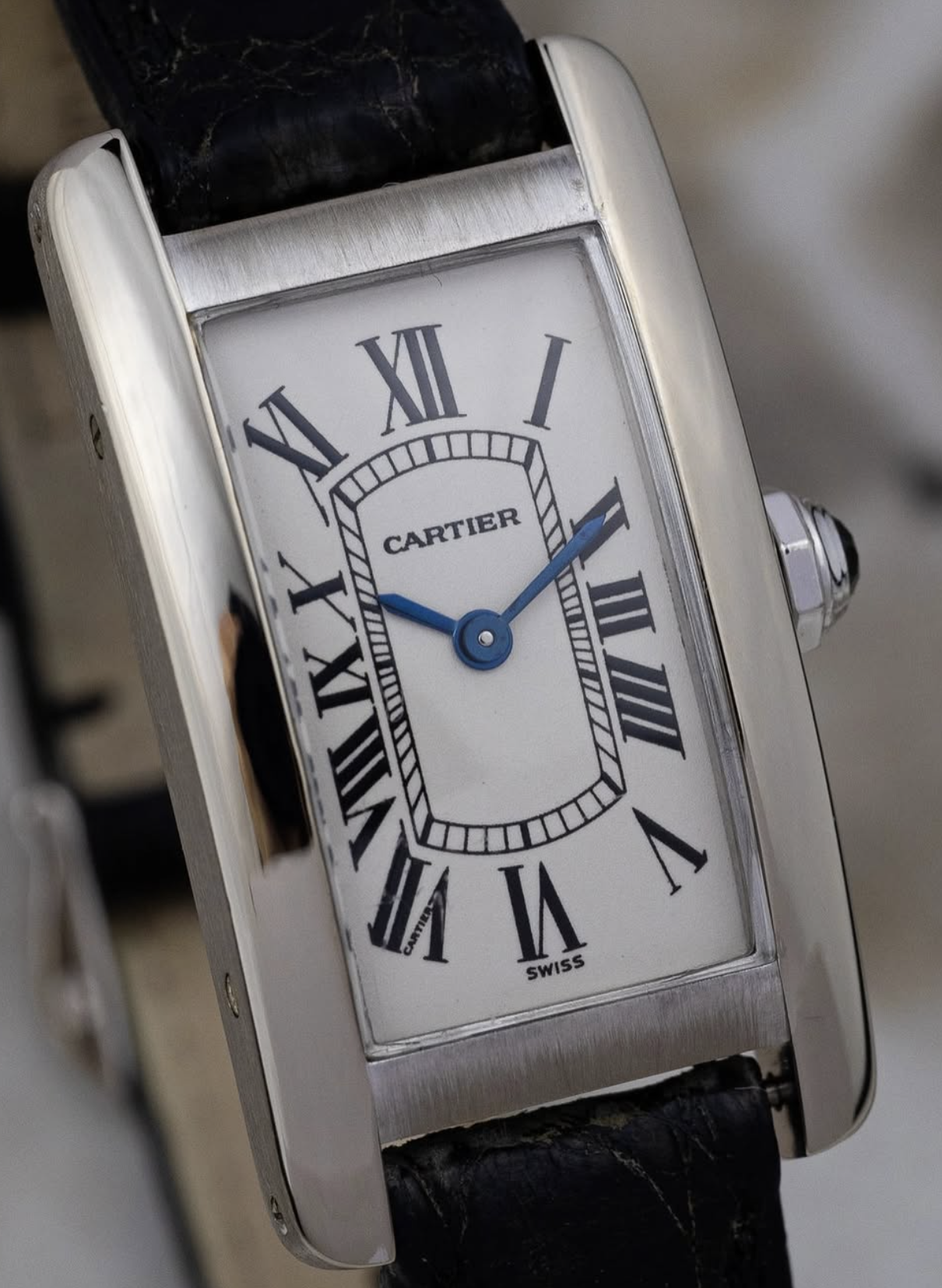
The Tank reimagined for a larger wrist — Cartier's curved reinterpretation of its own icon, bridging the elegance of the Cintrée with the boldness of a new era.
The Tank Américaine arrived in 1989 as Cartier's answer to a question the market had been asking for decades: what would the Tank Cintrée look like if it were designed for a contemporary wrist? The Cintrée — introduced in 1921 and cherished for its dramatically elongated, curved case — had remained a connoisseur's piece, produced in limited numbers and sized for an era when watches sat more delicately on the wrist.
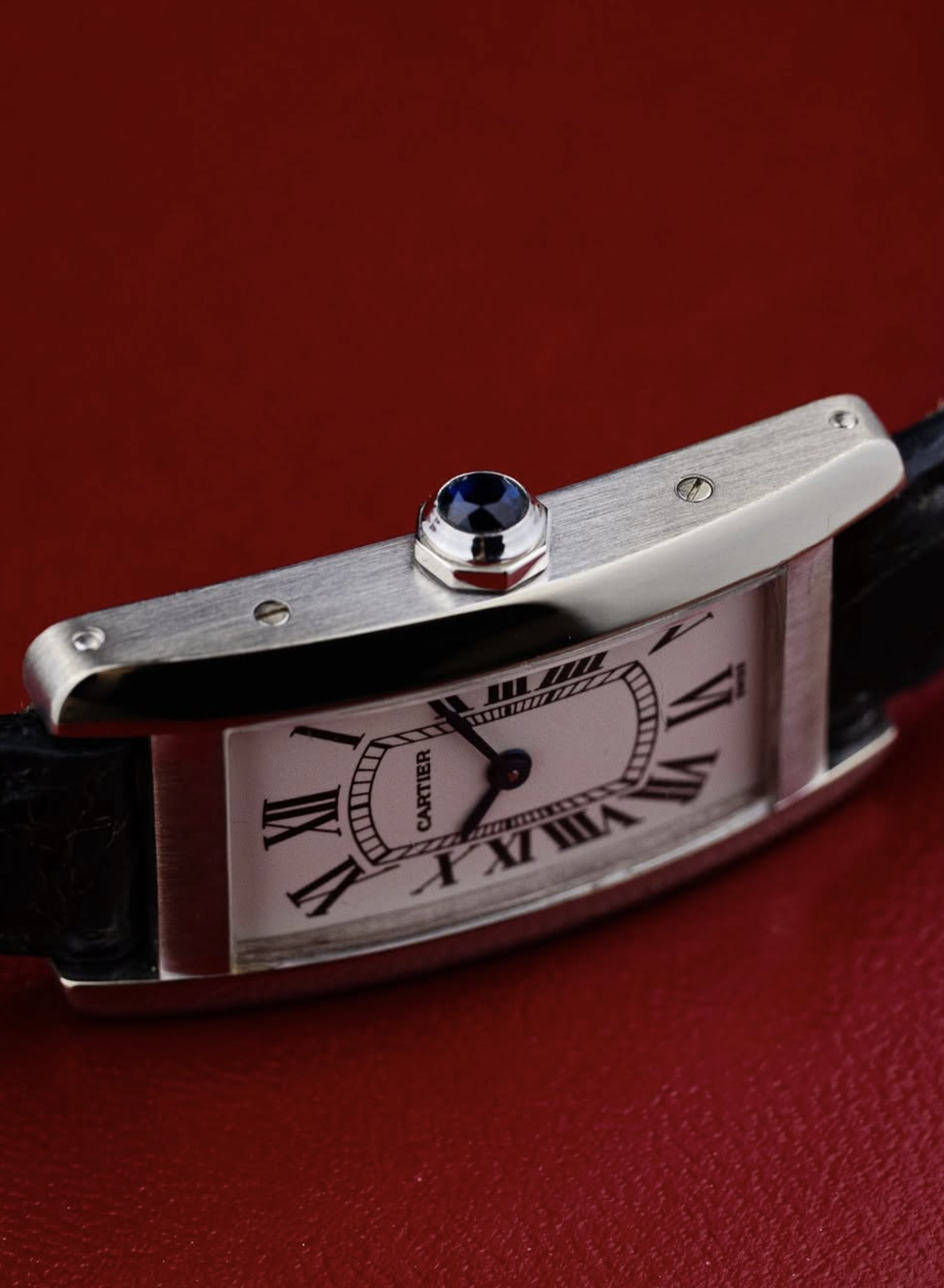
The Américaine preserved the Cintrée's essential character — the elongated rectangular form, the gently curved case profile that follows the wrist — but scaled it up and modernized its construction. The brancards are wider, the proportions more assertive, and the case back is secured with eight screws rather than the Cintrée's traditional snap-back. The name itself reflects the intended market: American collectors and a broader international audience who wanted Cartier's curved Tank aesthetic in a more wearable format.
What distinguishes the Américaine from other Tanks is the subtlety of its curves. Where the Tank Louis Cartier is emphatically flat and architectural, the Américaine introduces a third dimension. The case curves gently from lug to lug, creating a watch that wraps around the wrist rather than sitting atop it. This curvature is most apparent in profile view and gives the watch a distinctly different character on the wrist despite sharing the same design DNA — Roman numerals, railroad track, blued steel hands, sapphire cabochon crown — as every other Tank.
The model launched with both quartz and automatic movement options across a range of precious metals: 18k yellow gold, white gold, and rose gold, with stainless steel versions arriving later. Early references from the 1989–2001 production window are now firmly within vintage territory and represent some of the most wearable entry points into vintage Cartier collecting.
The Tank Américaine occupies a sweet spot in the vintage Cartier market. It is more recognizably a Tank than the Cintrée (which many non-collectors mistake for something else entirely), more contemporary in proportion than the Tank Louis, and available in a wider range of materials and sizes than either. For collectors who want a vintage Cartier dress watch that works with both a suit and a casual wardrobe, the early Américaine references are increasingly compelling — particularly as the neo-vintage market pushes attention toward 1990s production.
Ref. 1713 · c. 1990–1998
The Ref. 1713 Tank Américaine in 18k white gold with quartz movement — the 1989 reinterpretation that rehoused the Tank Cintrée's elongated, curved case philosophy for contemporary wrists. Measuring larger and more robust than its slender inspiration, this reference established the Américaine's character as the thinking collector's curved Tank, balancing elegance with wearability. Early production examples from the first years represent the model before subsequent refinements altered proportions and proportions.
4 documented references across 1 era
| Reference | |
|---|---|
| Ref. 1710 | |
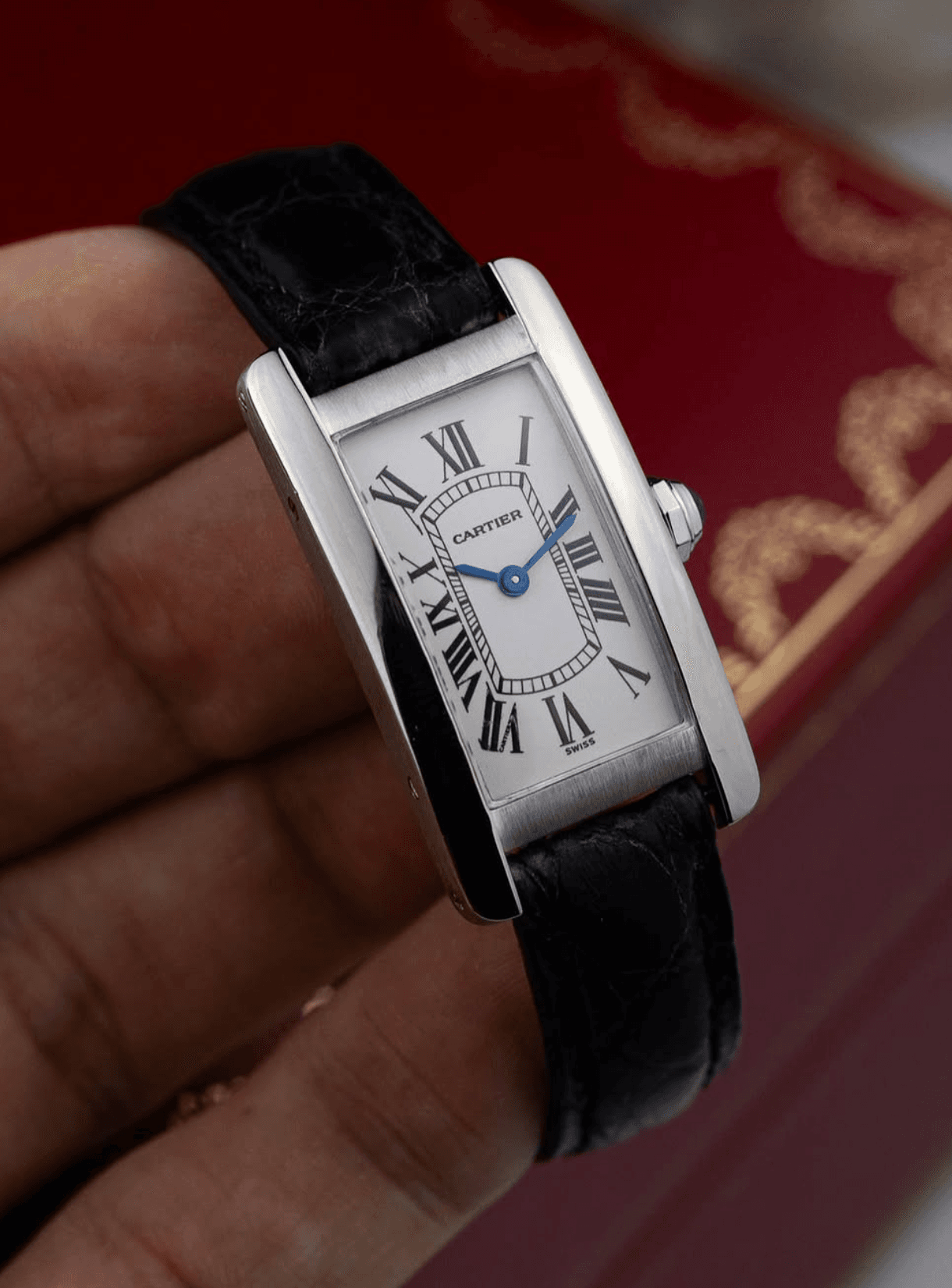 | Ref. 1713 |
| Ref. 1720 | |
| Ref. 1741 |
What every buyer, inheritor, and first-time collector should know.
Coming soon — vetted dealer listings for Tank Américaine.
Introduced 1977
A microscopic 'CARTIER' hidden within the Roman numerals — present on every genuine post-1977 dial.
Varies by era
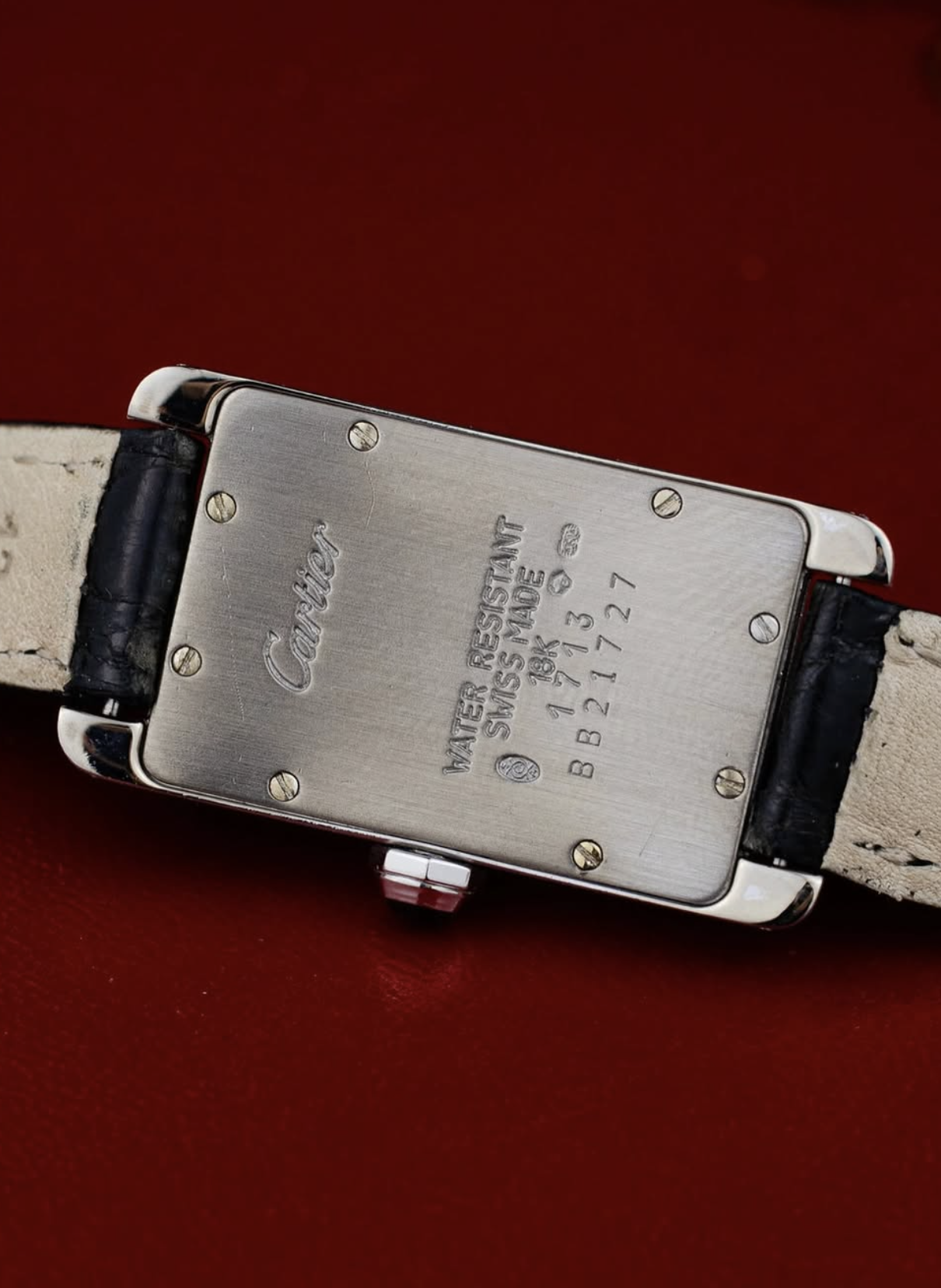
Genuine Cartier cases bear specific hallmarks including the Cartier name, reference number, serial number, and precious metal assay marks. Placement and style varies by era, with earlier pieces showing different hallmark configurations than modern examples.
Varies by era and model
Cartier sourced movements from various Swiss manufacturers throughout history, including Jaeger-LeCoultre, Frédéric Piguet, ETA, and in-house production. Knowing the correct caliber for a specific reference is essential for authentication and establishing provenance.
A Cartier hallmark since the early 20th century
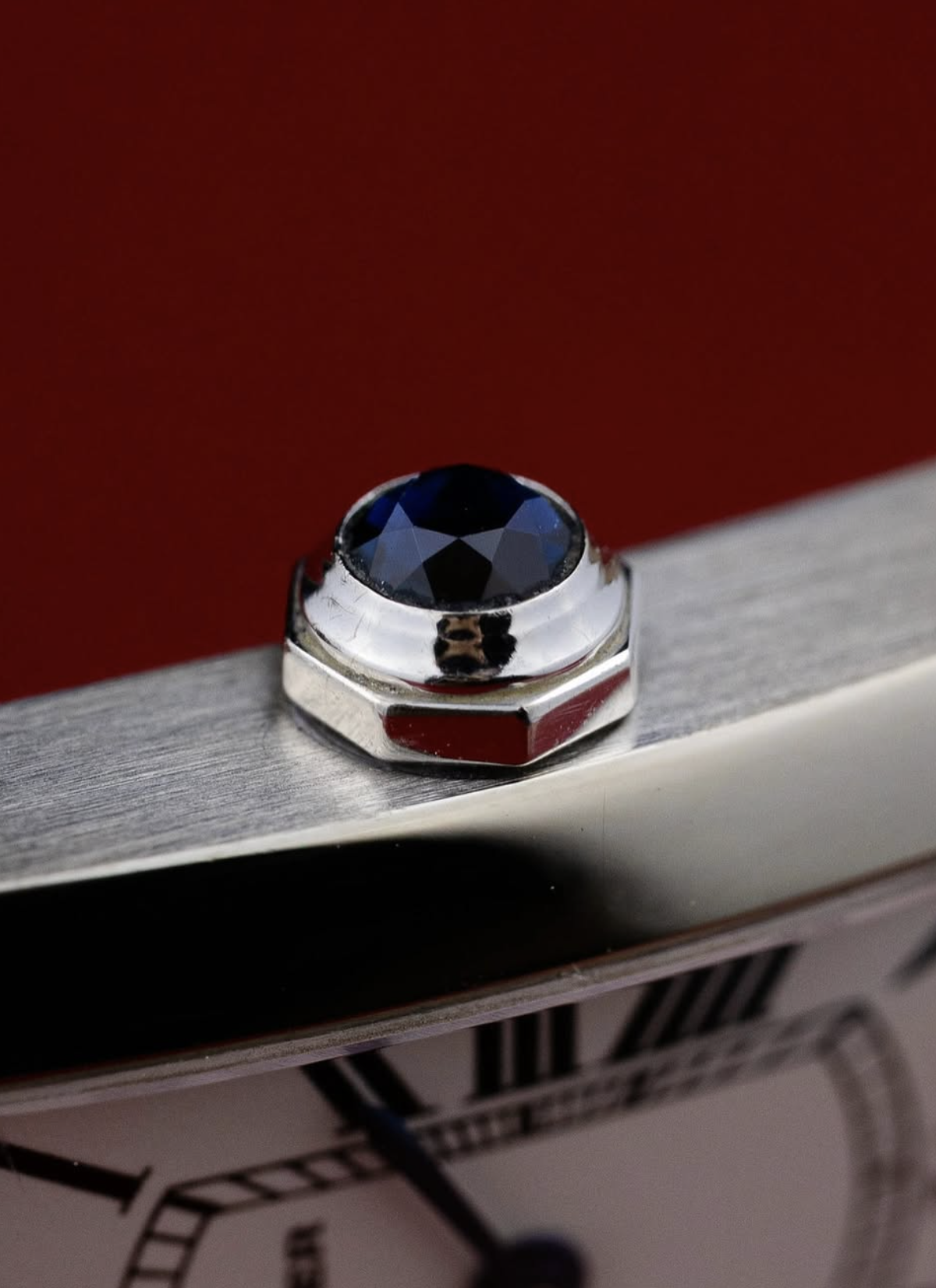
The blue sapphire (or spinel on less precious models) cabochon crown is a Cartier signature. Original crowns show consistent color saturation and are set flush with the crown body. Replacements often show misalignment or incorrect stone dimensions that reveal themselves under magnification.
Check the clasp first
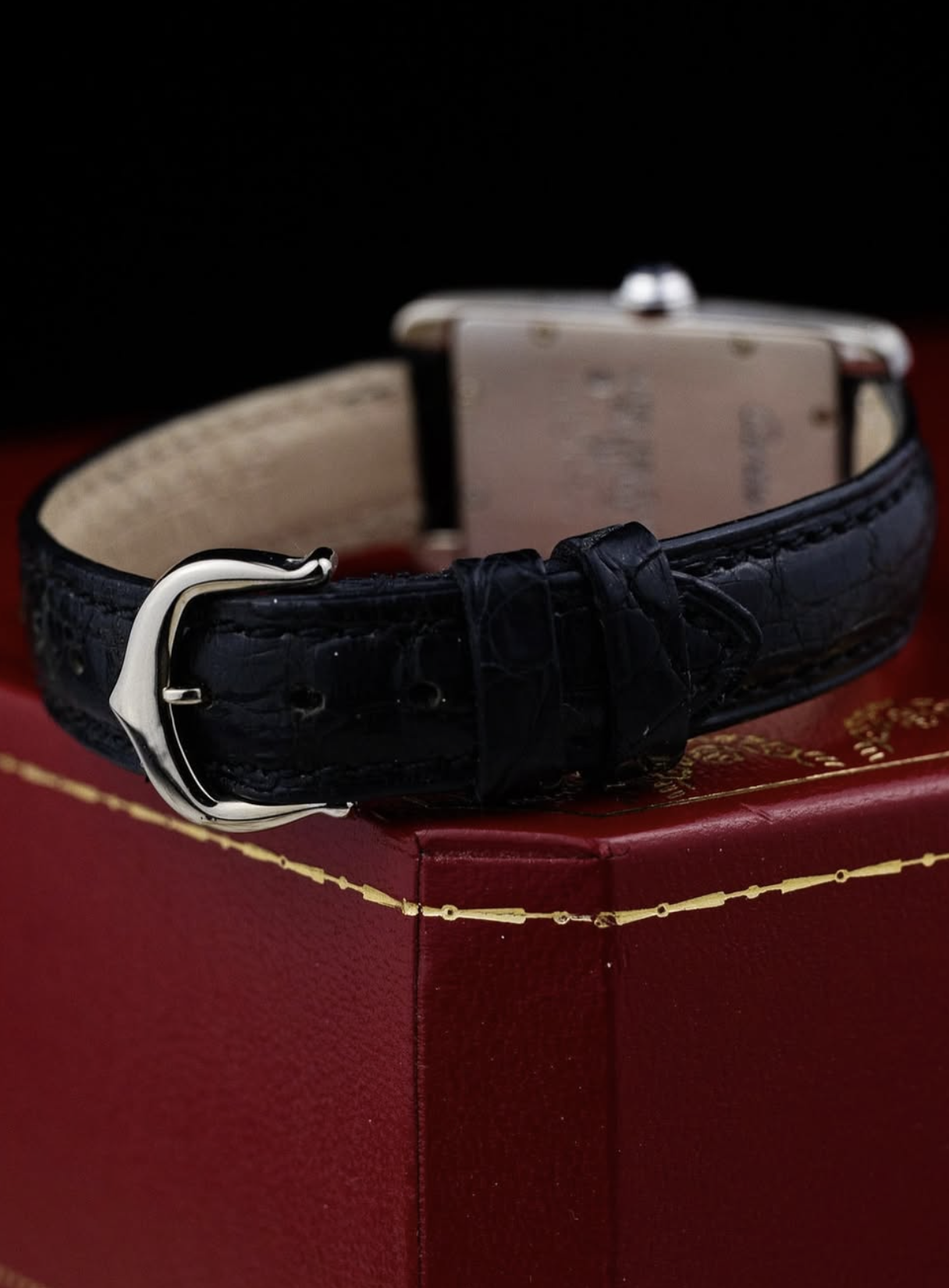
Cartier bracelets carry their own reference markings and the deployment clasp should bear the Cartier name and logo. Aftermarket bracelets are extremely common on vintage pieces, so verifying clasp authenticity and matching reference numbers is crucial to overall authentication.
Patina tells the story
Vintage Cartier dials develop characteristic aging—cream dials warm to ivory, lacquer dials may develop fine crazing, and applied indices can show legible wear patterns. Understanding acceptable versus concerning dial aging is key to valuing a vintage piece authentically.
Coming soon — price trends and comparable sales for Tank Américaine.
Find out what it is, what it's worth, and whether to keep, insure, or sell it.
START HERE →BUYERKnow what to look for, what to avoid, and what to pay.
CHECK BEFORE YOU BUY →SELLERPrice it right with current comparable sales, condition grading, and value drivers.
PRICE MY WATCH →